
Top Stories
Iran Appoints Mojtaba Khamenei as Supreme Leader Amid Hardline Shift

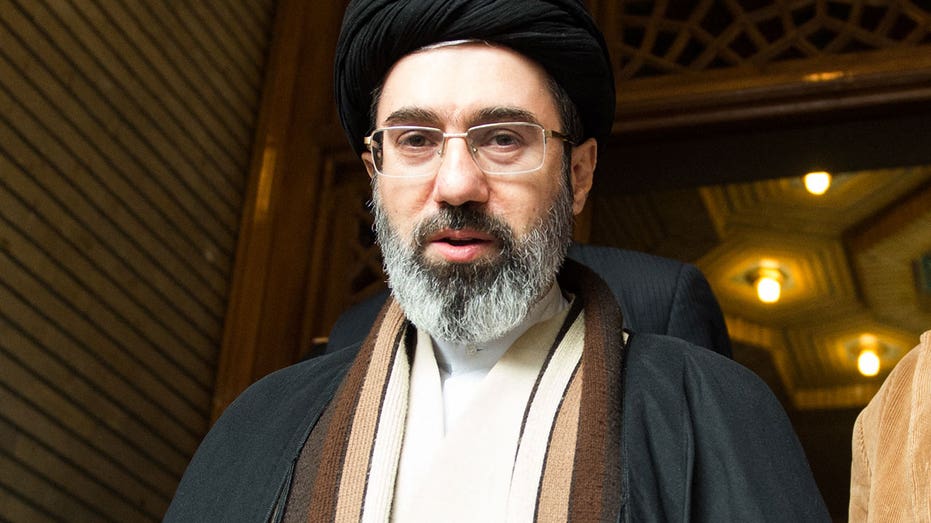
Iran has appointed Mojtaba Khamenei as the new supreme leader, succeeding his father, Ayatollah Ali Khamenei. This decision marks a significant shift in the country’s leadership, raising concerns among experts about a potential increase in hardline policies and a consolidation of power within Iran’s security apparatus.
Analysts view Mojtaba, aged 56, as a figure poised to continue and intensify the existing regime’s approach. Kasra Aarabi, director of Islamic Revolutionary Guard Corps research at the advocacy group United Against Nuclear Iran, characterized him as “his father on steroids,” indicating a more aggressive stance that may further entrench the regime’s authoritarian tendencies.
Mojtaba’s Rise to Power
Mojtaba Khamenei has long been involved in Iran’s political landscape, operating as a “mini supreme leader” from within the Bayt-e Rahbari, his father’s office. This structure was reportedly designed to maintain stability and continuity in leadership. Aarabi noted that “his father had created the Bayt’s extensive apparatus as a hidden power structure to ensure continuity should he be eliminated.” His ascent comes amid pressures from the Islamic Revolutionary Guard Corps (IRGC), which has historically played a significant role in Iranian politics.
Former U.S. President Donald Trump expressed discontent regarding the leadership transition. In an interview with the New York Post, he stated his unhappiness with Mojtaba’s rise but refrained from detailing any potential U.S. response.
An Iranian source familiar with the leadership transition revealed that earlier speculation regarding possible reforms under Mojtaba’s leadership has diminished. “Previously there were whispers suggesting that if Mojtaba were to become the leader, he might introduce reforms that would both open up the domestic political space and bring a more interactive approach to foreign policy,” the source stated. “However, now this possibility seems very weak.”
Implications for Iran and the Region
Mojtaba Khamenei has cultivated influence through Iran’s security institutions rather than traditional clerical authority. Born in Mashhad in 1969, he was educated in Tehran after the 1979 Islamic Revolution, which saw his father rise to power. In 2019, the United States imposed sanctions on him, highlighting his role in representing the supreme leader despite lacking formal governmental appointment.
Analysts such as Behnam Ben Taleblu from the Foundation for Defense of Democracies assert that Mojtaba’s rise reflects a broader shift within Iran’s political landscape. He emphasized that Mojtaba is expected to collaborate closely with the IRGC to secure his hold on power. Aarabi added that Mojtaba’s history suggests he has been keen to micromanage authority, reshaping Iran’s political environment to align with his interests.
Described as “deeply antisemitic, anti-American, and anti-Western,” Mojtaba is believed to have engaged in repressive tactics within Iran and has been implicated in international terror plots. His leadership appears unlikely to spur significant changes in Iran’s approach to governance or foreign relations.
Opposition groups within Iran view this transition as a continuation of existing policies rather than a signal for reform. Khalid Azizi, spokesperson for the Kurdistan Democratic Party of Iran, asserted that Mojtaba and his father share the same ideology and strategic objectives. Thus, he expressed skepticism regarding any fundamental policy shifts.
As the situation develops, analysts warn that the regime’s external relations may become more strained, particularly in light of its perceived vulnerabilities. Ben Taleblu cautioned that the leadership may escalate tensions as a survival strategy, believing that crises can be leveraged to maintain power.
The appointment of Mojtaba Khamenei as Iran’s supreme leader ultimately signals a steadfast commitment to the current regime’s hardline strategy, continuing a legacy characterized by authoritarianism and ideological rigidity.

Fort Worth Hosts Exciting Hometown Half Marathon and 5K/10K Events

Navy Launches Five New Acquisition Executives to Streamline Processes

Utah Mother Kouri Richins Accused of Poisoning Husband for Money

Oil Prices Surge, U.S. Stocks Show Unexpected Resilience

Cyberpunk 2077 Set for PS5 Pro Performance Update Soon

Home Assistant Tool Enhances Server Health with Global Score

Oregon Ducks Unveil Nature-Inspired Nike Air Max 95 Sneakers

Trump Administration’s Legal Tactics Intensify at the Border

Sandia Scientists Recognized as National Academy of Inventors Fellows

Libraries Challenge Rising E-Book Costs Amid Growing Demand

Tyreek Hill Responds to Tua Tagovailoa’s Comments on Team Dynamics

Liverpool Secures Agreement to Sign Young Striker Will Wright

San Francisco Hosts Unique Contest to Identify “Performative Males”

Astronomers Unveil Insights from β Pictoris b Using GRAVITY

University of Hawaiʻi Joins $25M AI Initiative to Monitor Disasters

Save Your Split Tomatoes: Expert Tips for Gardeners

Elon Musk Sculpture Travels From Utah to Yosemite National Park

California Develops New Method to Monitor Toxic Algal Blooms
-
 Lifestyle10 months ago
Libraries Challenge Rising E-Book Costs Amid Growing Demand
-
 Sports9 months ago
Tyreek Hill Responds to Tua Tagovailoa’s Comments on Team Dynamics
-
 Sports9 months ago
Liverpool Secures Agreement to Sign Young Striker Will Wright
-
 Science8 months ago
San Francisco Hosts Unique Contest to Identify “Performative Males”
-
 Science7 months ago
Astronomers Unveil Insights from β Pictoris b Using GRAVITY
-
Science6 months ago
University of Hawaiʻi Joins $25M AI Initiative to Monitor Disasters
-
 Lifestyle9 months ago
Save Your Split Tomatoes: Expert Tips for Gardeners
-
 Sports9 months ago
Elon Musk Sculpture Travels From Utah to Yosemite National Park
-
 Science9 months ago
California Develops New Method to Monitor Toxic Algal Blooms
-
 Lifestyle9 months ago
Princess Beatrice’s Daughter Athena Joins Siblings at London Parade
-
 Sports9 months ago
Bubba Wallace Makes History with Brickyard 400 Victory
-
 World9 months ago
Winter Storms Lash New South Wales with Snow, Flood Risks