
Top Stories
Archaeologists Uncover 409 Gold Coins from Russia’s Past

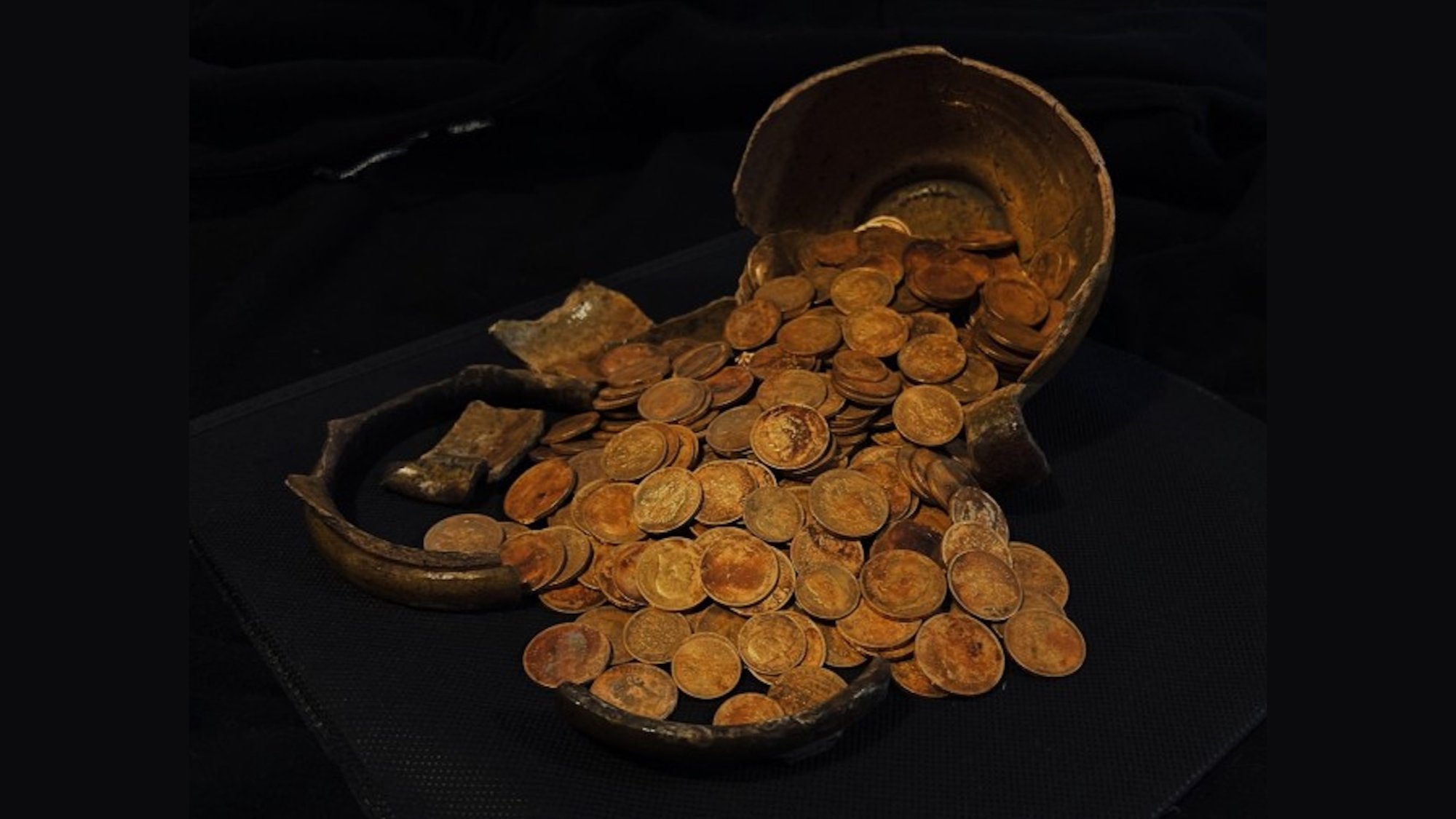
A significant archaeological discovery has emerged from the small town of Torzhok, located approximately 135 miles northwest of Moscow. Researchers from the Institute of Archaeology of the Russian Academy of Sciences recently unearthed a clay container containing 409 gold coins, buried beneath the foundation of a historic home for nearly 110 years. This remarkable find sheds light on a tumultuous period in Russian history, likely linked to the chaos of the Russian Revolution.
The coins, primarily 10-ruble pieces minted between 1848 and 1911, provide insight into the socioeconomic conditions of the time. Most of the coins were issued during the reign of Tsar Nicholas II, whose rule ended dramatically in 1917 with the fall of the Russian monarchy. This period marked one of the most significant upheavals in the 20th century, as the lower classes revolted against decades of Tsarist rule amid the backdrop of World War I.
Archaeologists believe the cache was hidden during the unrest that followed the revolution. The subsequent civil war led to the dissolution of the monarchy and the establishment of the Soviet Union. Many families sought to protect their wealth, often resorting to burying valuables for safekeeping. The recent discovery in Torzhok appears to be a poignant example of such measures taken during this uncertain time.
While conducting rescue excavations in preparation for construction, the team discovered a broken kandyushka, a small handled jar with a narrow neck. Inside this container was the astonishing collection of gold coins. After careful cataloging, researchers noted that the oldest coins dated back to the reign of Tsar Nicholas I. The majority, however, were minted during the reign of his successor, Nicholas II. This context supports the theory that the coins were hidden in the wake of the revolution, perhaps with the initial intention of retrieval that never came to fruition.
The identity of the coins’ original owner remains unknown, but historical records may assist in narrowing down the possibilities. Documentation indicates that there were 24 houses on the same street during the early 20th century, inhabited by various residents, including priests, accountants, storeowners, and laborers. Unfortunately, changes in the street’s numbering over the years complicate efforts to connect the treasure to a specific individual. Nevertheless, future archaeological endeavors in the area may yield additional findings that could further illuminate this mystery.
The remarkable discovery is set to be showcased at the All-Russian Historical and Ethnographic Museum in Torzhok, allowing historians and numismatists to study the coins in greater detail. As this trove of Russian history comes to light, it serves as a tangible reminder of the past and the lives of those who lived through one of the most significant transformations in the nation’s history.

Fort Worth Hosts Exciting Hometown Half Marathon and 5K/10K Events

Navy Launches Five New Acquisition Executives to Streamline Processes

Utah Mother Kouri Richins Accused of Poisoning Husband for Money

Oil Prices Surge, U.S. Stocks Show Unexpected Resilience

Cyberpunk 2077 Set for PS5 Pro Performance Update Soon

Home Assistant Tool Enhances Server Health with Global Score

Oregon Ducks Unveil Nature-Inspired Nike Air Max 95 Sneakers

Trump Administration’s Legal Tactics Intensify at the Border

Sandia Scientists Recognized as National Academy of Inventors Fellows

Libraries Challenge Rising E-Book Costs Amid Growing Demand

Tyreek Hill Responds to Tua Tagovailoa’s Comments on Team Dynamics

Liverpool Secures Agreement to Sign Young Striker Will Wright

San Francisco Hosts Unique Contest to Identify “Performative Males”

Astronomers Unveil Insights from β Pictoris b Using GRAVITY

University of Hawaiʻi Joins $25M AI Initiative to Monitor Disasters

Save Your Split Tomatoes: Expert Tips for Gardeners

Elon Musk Sculpture Travels From Utah to Yosemite National Park

California Develops New Method to Monitor Toxic Algal Blooms
-
 Lifestyle10 months ago
Libraries Challenge Rising E-Book Costs Amid Growing Demand
-
 Sports9 months ago
Tyreek Hill Responds to Tua Tagovailoa’s Comments on Team Dynamics
-
 Sports9 months ago
Liverpool Secures Agreement to Sign Young Striker Will Wright
-
 Science8 months ago
San Francisco Hosts Unique Contest to Identify “Performative Males”
-
 Science7 months ago
Astronomers Unveil Insights from β Pictoris b Using GRAVITY
-
Science6 months ago
University of Hawaiʻi Joins $25M AI Initiative to Monitor Disasters
-
 Lifestyle9 months ago
Save Your Split Tomatoes: Expert Tips for Gardeners
-
 Sports9 months ago
Elon Musk Sculpture Travels From Utah to Yosemite National Park
-
 Science9 months ago
California Develops New Method to Monitor Toxic Algal Blooms
-

 Lifestyle9 months ago
Princess Beatrice’s Daughter Athena Joins Siblings at London Parade
-

 Sports9 months ago
Bubba Wallace Makes History with Brickyard 400 Victory
-

 World9 months ago
Winter Storms Lash New South Wales with Snow, Flood Risks