
Science
Korean Team Unveils World’s First 4D Printing with Sulfur Waste

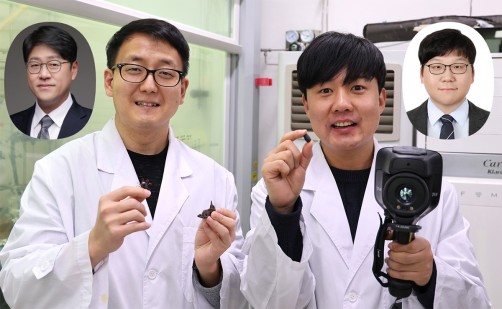
A research team from South Korea has made significant strides in 4D printing technology by developing a method that utilizes waste sulfur produced during petroleum refining. This pioneering work, led by Dr. Dong-Gyun Kim at the Korea Research Institute of Chemical Technology (KRICT), alongside researchers from Hanyang University and Sejong University, introduces self-actuating and recyclable structures made from sulfur-rich polymers.
The team’s innovation addresses the pressing need to convert industrial by-products into valuable resources. According to the United States Geological Survey (USGS), global sulfur production reached approximately 85 million tons in 2024, primarily as a by-product of petroleum refining. The development of what the researchers call “sulfur plastics” aims to transform this abundant material into a high-value resource. These plastics not only possess unique properties—such as the ability to transmit infrared light and capture heavy metals—but also represent a sustainable solution to waste management.
Overcoming Challenges in 3D Printing
Despite the advantages of sulfur plastics, their application in 3D printing has been limited due to their densely cross-linked structures, which impede flowability. The research team overcame this challenge by engineering a loosely cross-linked sulfur polymer network. This modification allows for easier extrusion and printing into complex 3D shapes. By precisely tuning the sulfur content and polymer structure, the team achieved 4D printing capabilities, where structures can autonomously change shape in response to heat or light.
A notable aspect of this technology involves the use of a near-infrared (NIR) laser. When applied for just eight seconds, the laser initiates a chemical welding process, temporarily breaking and reconnecting internal bonds. This unique feature enables printed components to join seamlessly without adhesives, facilitating the creation of intricate 4D structures akin to assembling LEGO blocks.
Innovative Applications and Future Impact
The research team also incorporated magnetic particles into their designs, resulting in soft robots measuring less than 1 cm that can move autonomously without the need for external power sources. By combining the shape-memory properties of the polymer with magnetic responsiveness, these robots can perform guided movements based on external magnetic fields.
Another crucial feature of this technology is its closed-loop manufacturing capability. Once their utility has been exhausted, the printed structures can be melted down and reused as feedstock for further printing, achieving a complete recycling process. This innovation establishes a resource-circulating manufacturing system, which is vital for sustainable development.
Dr. Dong-Gyun Kim emphasized the significance of this research, stating, “This study represents the first example of upcycling industrial sulfur waste into advanced robotic materials. Smart materials that can move autonomously and be recycled are expected to become key drivers of future soft robotics and automation technologies.”
The findings of this groundbreaking research were published in the scientific journal Advanced Materials. The project received support from the KRICT core research program, the Ministry of Science and ICT of Korea, and the U.S. Army International Technology Center.
KRICT, established in 1976, is a non-profit research institute funded by the Korean government. It plays a pivotal role in advancing national chemical technologies across various fields, including chemistry, materials science, and environmental science. The institute aims to tackle pressing challenges in chemistry and engineering, contributing to a sustainable future.
For more information about KRICT and its initiatives, visit their official website at https://www.krict.re.kr/eng/.

Fort Worth Hosts Exciting Hometown Half Marathon and 5K/10K Events

Navy Launches Five New Acquisition Executives to Streamline Processes

Utah Mother Kouri Richins Accused of Poisoning Husband for Money

Oil Prices Surge, U.S. Stocks Show Unexpected Resilience

Cyberpunk 2077 Set for PS5 Pro Performance Update Soon

Home Assistant Tool Enhances Server Health with Global Score

Oregon Ducks Unveil Nature-Inspired Nike Air Max 95 Sneakers

Trump Administration’s Legal Tactics Intensify at the Border

Sandia Scientists Recognized as National Academy of Inventors Fellows

Libraries Challenge Rising E-Book Costs Amid Growing Demand

Astronomers Unveil Insights from β Pictoris b Using GRAVITY

University of Hawaiʻi Joins $25M AI Initiative to Monitor Disasters

Tyreek Hill Responds to Tua Tagovailoa’s Comments on Team Dynamics

San Francisco Hosts Unique Contest to Identify “Performative Males”

Liverpool Secures Agreement to Sign Young Striker Will Wright

Save Your Split Tomatoes: Expert Tips for Gardeners

Elon Musk Sculpture Travels From Utah to Yosemite National Park

Bubba Wallace Makes History with Brickyard 400 Victory
-
 Lifestyle10 months ago
Libraries Challenge Rising E-Book Costs Amid Growing Demand
-
 Science8 months ago
Astronomers Unveil Insights from β Pictoris b Using GRAVITY
-
Science7 months ago
University of Hawaiʻi Joins $25M AI Initiative to Monitor Disasters
-
 Sports10 months ago
Tyreek Hill Responds to Tua Tagovailoa’s Comments on Team Dynamics
-
 Science9 months ago
San Francisco Hosts Unique Contest to Identify “Performative Males”
-
 Sports10 months ago
Liverpool Secures Agreement to Sign Young Striker Will Wright
-
 Lifestyle10 months ago
Save Your Split Tomatoes: Expert Tips for Gardeners
-
 Sports10 months ago
Elon Musk Sculpture Travels From Utah to Yosemite National Park
-
 Sports10 months ago
Bubba Wallace Makes History with Brickyard 400 Victory
-

 Science10 months ago
California Develops New Method to Monitor Toxic Algal Blooms
-

 Lifestyle10 months ago
Princess Beatrice’s Daughter Athena Joins Siblings at London Parade
-

 Sports10 months ago
Kobey’s Swap Meet Marks 45 Years of Community and Commerce