
World
Federal Reserve Chair Jerome Powell Challenges Trump’s Authority

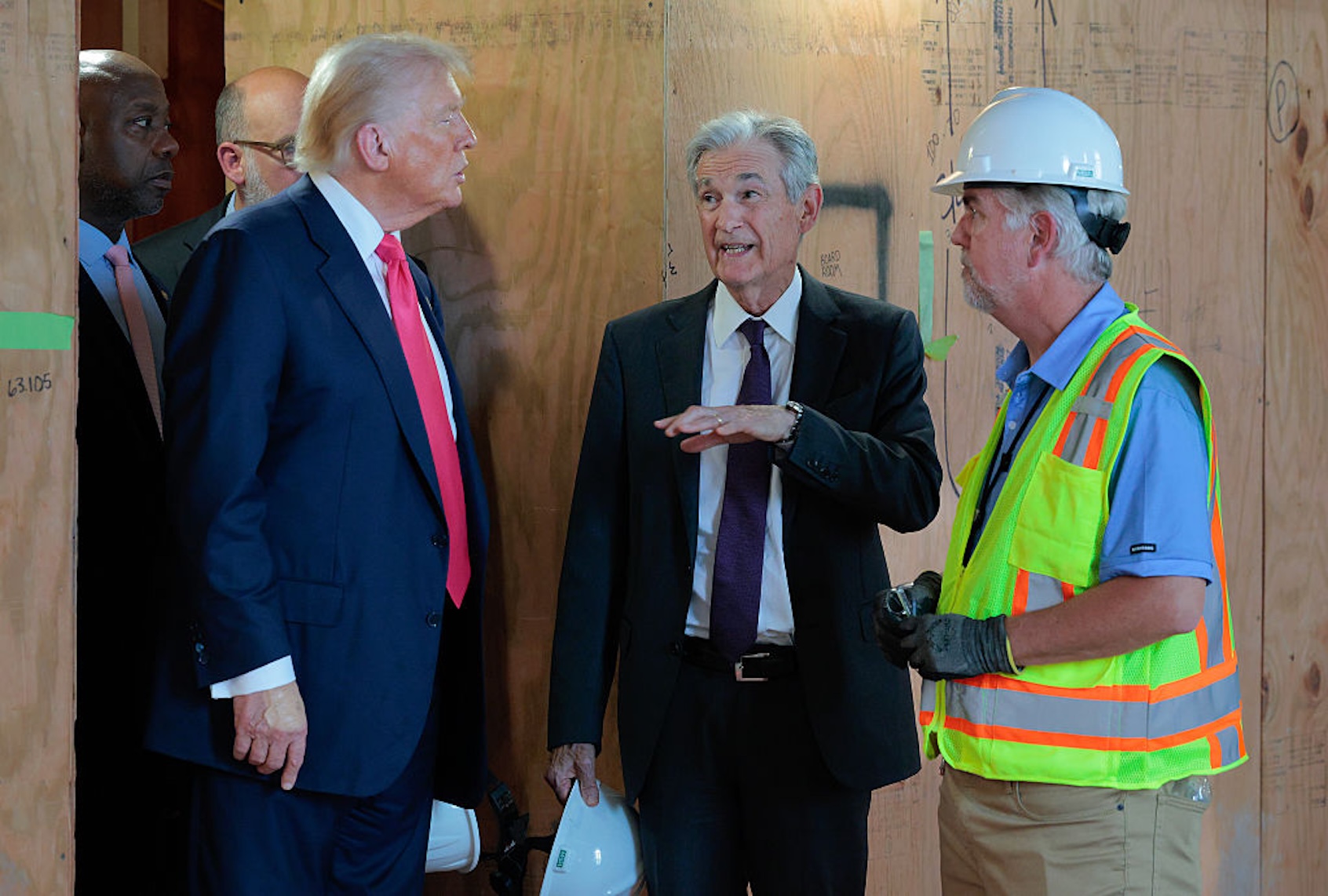
Federal Reserve Chair Jerome Powell has publicly challenged former President Donald Trump following the Justice Department’s recent grand jury subpoenas against him. This unprecedented move, seen as an attack on the Federal Reserve’s independence, raises serious concerns about political interference in monetary policy. The subpoenas were issued on March 15, 2024, in relation to Powell’s testimony before the Senate Banking Committee regarding a $2.5 billion renovation of the Fed’s Washington headquarters.
During a video statement released late Sunday, Powell asserted that the official reason for the subpoenas relates to whether he accurately described details of the renovation project. However, he indicated that the true motivation behind the investigation is his refusal to comply with Trump’s demands for aggressive interest rate cuts. Powell’s stance highlights the ongoing tension between the Federal Reserve’s independence and the former president’s authoritarian governance style.
The Federal Reserve was established to operate independently of political pressures, a principle enshrined in the Banking Act of 1935. This legislation was designed to prevent presidents from influencing monetary policy for political gain, particularly to avoid inflation and economic instability. Powell’s recent actions serve as a reminder of this foundational tenet. He expressed that the current situation exemplifies a blatant attempt to undermine the Fed’s autonomy, stating, “Even by Trump’s standards, the brazenness of this assault is staggering.”
Since assuming office, Trump has been vocal in his criticism of Powell, calling for his dismissal and labeling him incompetent. The former president has consistently pressured the Federal Reserve to lower interest rates, treating it as an extension of his administration rather than an independent entity. Following Powell’s rebuffs to these requests, Trump’s allies sought to find a justification for retaliation, which they found in the renovation project.
The investigation into the Fed’s renovation project was fueled by a report from economist Andrew Levin, a former Federal Reserve official. Levin’s brief, published with the libertarian think tank Mercatus Center, drew the ire of Trump supporters, who labeled the project a “Palace of Versailles.” Powell countered these claims during Senate hearings, clarifying that the renovation lacks extravagant features such as VIP dining rooms or lavish decorations.
In an environment charged with political animosity, figures like Bill Pulte, director of the Federal Housing Finance Agency, have taken a leading role in pressuring the Fed. Pulte has openly criticized Powell’s monetary policy and urged lawmakers to investigate his Senate testimony. Additionally, Rep. Anna Paulina Luna has referred Powell for potential perjury, further escalating the situation. The investigation is being overseen by U.S. Attorney Jeanine Pirro, a known Trump loyalist.
Trump’s response to the investigation has been dismissive. In an interview with NBC News, he claimed ignorance regarding the subpoenas while simultaneously disparaging Powell’s performance at the Federal Reserve. This contradictory stance has led to criticism from lawmakers, including Sen. Chris Murphy of Connecticut, who emphasized that Trump’s statements should not be taken as fact.
The implications of this unfolding situation extend beyond Powell, as they signal a broader pattern of authoritarian governance. Trump’s administration has previously weaponized federal resources to target perceived adversaries, raising alarms about the erosion of institutional norms. Instances such as threatening to penalize corporations for their responses to government policies illustrate a concerning trend.
Amid this landscape, Powell’s leadership is under scrutiny. His term as chair ends in May, but he remains a governor until 2028. While it is customary for chairs to step down completely, Powell’s recent actions indicate a possible determination to uphold the Federal Reserve’s independence. Rather than capitulating to pressure, he may choose to remain in his role, defying attempts to undermine the institution.
The unfolding events underscore the precarious balance between political influence and economic stability in the United States. As Powell stands firm against these challenges, the future of the Federal Reserve’s independence hangs in the balance. The coming months will be critical in shaping the relationship between monetary policy and political authority, with potential ramifications for the broader economy.

Fort Worth Hosts Exciting Hometown Half Marathon and 5K/10K Events

Navy Launches Five New Acquisition Executives to Streamline Processes

Utah Mother Kouri Richins Accused of Poisoning Husband for Money

Oil Prices Surge, U.S. Stocks Show Unexpected Resilience

Cyberpunk 2077 Set for PS5 Pro Performance Update Soon

Home Assistant Tool Enhances Server Health with Global Score

Oregon Ducks Unveil Nature-Inspired Nike Air Max 95 Sneakers

Trump Administration’s Legal Tactics Intensify at the Border

Sandia Scientists Recognized as National Academy of Inventors Fellows

Libraries Challenge Rising E-Book Costs Amid Growing Demand

Tyreek Hill Responds to Tua Tagovailoa’s Comments on Team Dynamics

San Francisco Hosts Unique Contest to Identify “Performative Males”

Liverpool Secures Agreement to Sign Young Striker Will Wright

Astronomers Unveil Insights from β Pictoris b Using GRAVITY

Save Your Split Tomatoes: Expert Tips for Gardeners

University of Hawaiʻi Joins $25M AI Initiative to Monitor Disasters

Elon Musk Sculpture Travels From Utah to Yosemite National Park

Princess Beatrice’s Daughter Athena Joins Siblings at London Parade
-
 Lifestyle9 months ago
Libraries Challenge Rising E-Book Costs Amid Growing Demand
-
 Sports9 months ago
Tyreek Hill Responds to Tua Tagovailoa’s Comments on Team Dynamics
-
 Science8 months ago
San Francisco Hosts Unique Contest to Identify “Performative Males”
-
 Sports9 months ago
Liverpool Secures Agreement to Sign Young Striker Will Wright
-
 Science7 months ago
Astronomers Unveil Insights from β Pictoris b Using GRAVITY
-
 Lifestyle9 months ago
Save Your Split Tomatoes: Expert Tips for Gardeners
-
Science6 months ago
University of Hawaiʻi Joins $25M AI Initiative to Monitor Disasters
-
 Sports9 months ago
Elon Musk Sculpture Travels From Utah to Yosemite National Park
-
 Lifestyle9 months ago
Princess Beatrice’s Daughter Athena Joins Siblings at London Parade
-

 Science9 months ago
California Develops New Method to Monitor Toxic Algal Blooms
-

 Sports9 months ago
Bubba Wallace Makes History with Brickyard 400 Victory
-

 World9 months ago
Winter Storms Lash New South Wales with Snow, Flood Risks