
World
Congressman Himes Critiques U.S. Military Actions in Venezuela


During an interview on “Face the Nation” on January 4, 2026, Congressman Jim Himes, a Democrat from Connecticut and the top Democrat on the House Intelligence Committee, shared his concerns regarding the U.S. military operations in Venezuela. Himes criticized the lack of bipartisan communication and transparency from the current administration about these actions, particularly in relation to the situation involving President Nicolás Maduro.
Concerns Over Bipartisan Communication
In his conversation with host Margaret Brennan, Himes noted a significant disparity in communication between parties. He highlighted that while Tom Cotton, the chairman of the Senate Intelligence Committee, has been in regular contact with the administration, he and other Democrats have received no outreach. “It seems like the legal obligation to keep Congress informed applies only to one party,” Himes stated, expressing his frustration over the situation.
Himes drew parallels between the current military operations against Maduro and past U.S. interventions, referencing the euphoric feelings surrounding military successes against leaders like Saddam Hussein and Muammar Gaddafi. He cautioned that while the initial thrill may be prominent, the aftermath of military interventions often reveals a lack of sustainable plans for governance, as seen in Iraq and Libya.
Legal and Ethical Implications
Addressing the legal framework of the U.S. military’s actions, Himes argued that the administration’s operations constitute a violation of international law. He emphasized that under the United Nations Charter, such actions lack legal justification. Furthermore, he pointed out the constitutional requirement for congressional approval of military activity, which he believes has not been fulfilled in this case.
“There is nothing legal about this,” Himes declared, emphasizing the need for congressional consultation.
Himes also expressed concern about the precedent set by these operations. He warned that this approach could embolden other countries, such as Russia and China, to justify similar actions in their regions, undermining international norms. He noted, “Russia and China just learned that all you need to do if you want to go into a country is to say that the leader is a bad person.”
Responding to Brennan’s query about the administration’s references to historical precedents, such as the operation against Manuel Noriega in Panama, Himes dismissed these comparisons. He reiterated that the circumstances surrounding each case are vastly different, highlighting that the Panamanian Congress had declared war on the U.S. prior to that intervention.
As the discussion concluded, Himes reiterated the importance of a clear and consistent approach to U.S. foreign policy, particularly regarding military interventions. “This isn’t just about regime change; it’s about the values we stand for as a nation,” he stated, underscoring the need for adherence to international law and constitutional processes.
The implications of Himes’ comments resonate beyond the immediate context of Venezuela, raising critical questions about the future of U.S. foreign policy and its impact on global stability.

Fort Worth Hosts Exciting Hometown Half Marathon and 5K/10K Events

Navy Launches Five New Acquisition Executives to Streamline Processes

Utah Mother Kouri Richins Accused of Poisoning Husband for Money

Oil Prices Surge, U.S. Stocks Show Unexpected Resilience

Cyberpunk 2077 Set for PS5 Pro Performance Update Soon

Home Assistant Tool Enhances Server Health with Global Score

Oregon Ducks Unveil Nature-Inspired Nike Air Max 95 Sneakers

Trump Administration’s Legal Tactics Intensify at the Border

Sandia Scientists Recognized as National Academy of Inventors Fellows

Libraries Challenge Rising E-Book Costs Amid Growing Demand

Astronomers Unveil Insights from β Pictoris b Using GRAVITY

University of Hawaiʻi Joins $25M AI Initiative to Monitor Disasters

Tyreek Hill Responds to Tua Tagovailoa’s Comments on Team Dynamics

San Francisco Hosts Unique Contest to Identify “Performative Males”

Liverpool Secures Agreement to Sign Young Striker Will Wright

Save Your Split Tomatoes: Expert Tips for Gardeners

Elon Musk Sculpture Travels From Utah to Yosemite National Park

Bubba Wallace Makes History with Brickyard 400 Victory
-
 Lifestyle10 months ago
Libraries Challenge Rising E-Book Costs Amid Growing Demand
-
 Science8 months ago
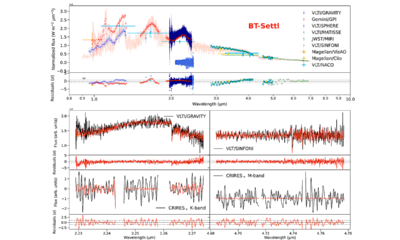
Astronomers Unveil Insights from β Pictoris b Using GRAVITY
-
Science7 months ago
University of Hawaiʻi Joins $25M AI Initiative to Monitor Disasters
-
 Sports10 months ago
Tyreek Hill Responds to Tua Tagovailoa’s Comments on Team Dynamics
-
 Science9 months ago
San Francisco Hosts Unique Contest to Identify “Performative Males”
-
 Sports10 months ago
Liverpool Secures Agreement to Sign Young Striker Will Wright
-
 Lifestyle10 months ago
Save Your Split Tomatoes: Expert Tips for Gardeners
-
 Sports10 months ago
Elon Musk Sculpture Travels From Utah to Yosemite National Park
-
 Sports10 months ago
Bubba Wallace Makes History with Brickyard 400 Victory
-

 Science10 months ago
California Develops New Method to Monitor Toxic Algal Blooms
-

 Lifestyle10 months ago
Princess Beatrice’s Daughter Athena Joins Siblings at London Parade
-

 Sports10 months ago
Kobey’s Swap Meet Marks 45 Years of Community and Commerce