
Top Stories
Silver Futures Surge Then Stabilize: Key Insights for Traders

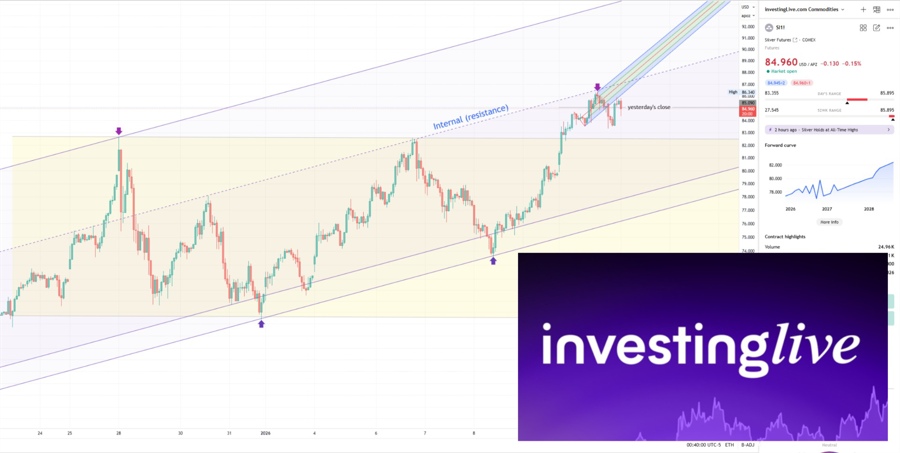
Silver futures experienced a significant surge earlier this week, with prices climbing over 8 percent from their lows. This movement attracted momentum traders and renewed interest from investors in precious metals. However, recent market behavior indicates a shift toward a more cautious phase, prompting traders to reevaluate their strategies.
Market Dynamics and Price Action
The trading session began with silver opening at a strong gap higher, which initially fueled bullish sentiment. As the day progressed, the character of price action shifted. This change did not immediately reverse the upward trend but signaled a transition from trend extension to risk assessment. Following an initial pullback, silver briefly regained the Volume Weighted Average Price (VWAP) and returned to the value area, suggesting a constructive outlook at first glance.
Despite this, analysis from OrderFlow Intel revealed a different narrative. The price recovery was characterized as a corrective bounce rather than a bullish reset. One key concept in silver technical analysis is distinguishing between a test and acceptance. The market did not merely dip into value and rebound; it demonstrated acceptance back into value, indicating that the prior trend phase may have come to an end.
This acceptance occurred before the price reached deeper mean-reversion levels such as VWAP or the Point of Control (POC), providing an early signal to traders about changing market conditions.
Key Levels and Trading Strategies
For traders aiming to navigate the silver market effectively, understanding key reference levels is crucial. The zone between 84.40 and 84.62 serves as a significant pivot area. This range acts as a two-day fair value reference, making it essential for directional filtering. If silver maintains a position above this zone while printing higher lows, traders may anticipate further upside, albeit with possible pauses and consolidations.
Conversely, if silver fails to hold above 84.40 to 84.62 and begins to close below it, the outlook may shift towards bearish sentiment. This analysis serves as a guide for traders making decisions in a volatile environment. Many traders typically await breaks of VWAP or POC before altering their bias. While these levels remain important, they often coincide with areas where initial price movements may pause or retrace.
The market has provided earlier signals that can be identified through OrderFlow Intel, which aims to highlight impending moves before they become evident on lower timeframes. Currently, based on higher-quality timeframes with reduced noise, silver is identified as being in an early bearish continuation phase rather than experiencing a panic selloff. This distinction is important, as it shapes trading behavior and expectations.
In a recent update shared on our Telegram Channel, a profitable silver short position was highlighted, with an entry point close to the previous day’s high. This recommendation followed a detailed analysis indicating that despite the recent bullish rally, silver was showing signs of fatigue. Until silver futures can reclaim and hold above the $86 mark—surpassing yesterday’s value area high—any rallies are likely to face selling pressure.
As traders assess the silver market, remaining vigilant to these dynamics and key levels will be essential for navigating potential opportunities in the coming sessions.

Fort Worth Hosts Exciting Hometown Half Marathon and 5K/10K Events

Navy Launches Five New Acquisition Executives to Streamline Processes

Utah Mother Kouri Richins Accused of Poisoning Husband for Money

Oil Prices Surge, U.S. Stocks Show Unexpected Resilience

Cyberpunk 2077 Set for PS5 Pro Performance Update Soon

Home Assistant Tool Enhances Server Health with Global Score

Oregon Ducks Unveil Nature-Inspired Nike Air Max 95 Sneakers

Trump Administration’s Legal Tactics Intensify at the Border

Sandia Scientists Recognized as National Academy of Inventors Fellows

Libraries Challenge Rising E-Book Costs Amid Growing Demand

Tyreek Hill Responds to Tua Tagovailoa’s Comments on Team Dynamics

San Francisco Hosts Unique Contest to Identify “Performative Males”

Liverpool Secures Agreement to Sign Young Striker Will Wright

Astronomers Unveil Insights from β Pictoris b Using GRAVITY

University of Hawaiʻi Joins $25M AI Initiative to Monitor Disasters

Save Your Split Tomatoes: Expert Tips for Gardeners

Elon Musk Sculpture Travels From Utah to Yosemite National Park

Princess Beatrice’s Daughter Athena Joins Siblings at London Parade
-
 Lifestyle9 months ago
Libraries Challenge Rising E-Book Costs Amid Growing Demand
-
 Sports9 months ago
Tyreek Hill Responds to Tua Tagovailoa’s Comments on Team Dynamics
-
 Science8 months ago
San Francisco Hosts Unique Contest to Identify “Performative Males”
-
 Sports9 months ago
Liverpool Secures Agreement to Sign Young Striker Will Wright
-
 Science7 months ago
Astronomers Unveil Insights from β Pictoris b Using GRAVITY
-
Science6 months ago
University of Hawaiʻi Joins $25M AI Initiative to Monitor Disasters
-
 Lifestyle9 months ago
Save Your Split Tomatoes: Expert Tips for Gardeners
-
 Sports9 months ago
Elon Musk Sculpture Travels From Utah to Yosemite National Park
-
 Lifestyle9 months ago
Princess Beatrice’s Daughter Athena Joins Siblings at London Parade
-

 Science9 months ago
California Develops New Method to Monitor Toxic Algal Blooms
-

 Sports9 months ago
Bubba Wallace Makes History with Brickyard 400 Victory
-

 World9 months ago
Winter Storms Lash New South Wales with Snow, Flood Risks