
Science
Researchers Enhance Biofuel Supply Chain Resilience Amid Disruptions

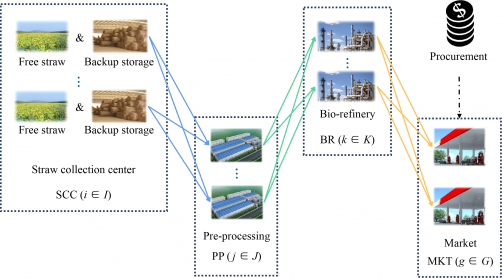
Researchers from Tianjin University have developed an innovative approach to enhance the resilience of biofuel supply chains in the face of disruptions. Their study, titled “Optimization design method for biofuel resilient supply chain considering node disruption impacts in a two-stage stochastic programming framework,” was published in the journal Frontiers of Chemical Science & Engineering, Volume 19, Issue 6.
As economic globalization progresses, biofuel supply chains are becoming more complex and extensive. This complexity introduces greater uncertainties and risks of disruptions for businesses operating within this sector. The need for resilient supply chains that can adapt to these challenges while ensuring security and competitiveness is increasingly pressing.
Traditional supply chain design methods often fall short in effectively addressing the risks associated with disruptions. Researchers identified a gap in the quantification and evaluation of these risks, prompting their investigation. To tackle this issue, the study proposes an improved Node Disruption Impact Index with adjustable parameters. This index assesses the cost changes in a supply chain resulting from disruptions at various nodes, allowing for the identification of nodes with differing risk levels and providing a means to evaluate the overall disruption impact.
Innovative Index and Optimization Model
The adjustable parameters within the Node Disruption Impact Index can be tailored to the specific needs of supply chain enterprises, enabling a balance between economic benefits and resilience. By applying this index to the fluctuation range of node uncertainties, the researchers developed a two-stage stochastic programming model aimed at optimizing supply chain operations while addressing potential high disruption risks.
The practical application of this model was tested on a biofuel supply chain case in Guangdong Province. The results revealed that in scenarios where high-risk nodes faced interruptions, the proposed optimization model significantly outperformed traditional models in terms of both cost efficiency and market delivery rates. This finding underscores the effectiveness of the new method in designing resilient supply chains.
The implications of this research extend beyond academic interest, as businesses increasingly seek strategies to navigate the complexities of global supply chains. The study not only provides a robust framework for assessing risks but also offers actionable insights for enhancing supply chain resilience.
For more detailed information, the full paper is available at: https://journal.hep.com.cn/fcse/EN/10.1007/s11705-025-2548-z.

Fort Worth Hosts Exciting Hometown Half Marathon and 5K/10K Events

Navy Launches Five New Acquisition Executives to Streamline Processes

Utah Mother Kouri Richins Accused of Poisoning Husband for Money

Oil Prices Surge, U.S. Stocks Show Unexpected Resilience

Cyberpunk 2077 Set for PS5 Pro Performance Update Soon

Home Assistant Tool Enhances Server Health with Global Score

Oregon Ducks Unveil Nature-Inspired Nike Air Max 95 Sneakers

Trump Administration’s Legal Tactics Intensify at the Border

Sandia Scientists Recognized as National Academy of Inventors Fellows

Libraries Challenge Rising E-Book Costs Amid Growing Demand

Tyreek Hill Responds to Tua Tagovailoa’s Comments on Team Dynamics

San Francisco Hosts Unique Contest to Identify “Performative Males”

Liverpool Secures Agreement to Sign Young Striker Will Wright

Astronomers Unveil Insights from β Pictoris b Using GRAVITY

University of Hawaiʻi Joins $25M AI Initiative to Monitor Disasters

Save Your Split Tomatoes: Expert Tips for Gardeners

Elon Musk Sculpture Travels From Utah to Yosemite National Park

Princess Beatrice’s Daughter Athena Joins Siblings at London Parade
-
 Lifestyle9 months ago
Libraries Challenge Rising E-Book Costs Amid Growing Demand
-
 Sports9 months ago
Tyreek Hill Responds to Tua Tagovailoa’s Comments on Team Dynamics
-
 Science8 months ago
San Francisco Hosts Unique Contest to Identify “Performative Males”
-
 Sports9 months ago
Liverpool Secures Agreement to Sign Young Striker Will Wright
-
 Science7 months ago
Astronomers Unveil Insights from β Pictoris b Using GRAVITY
-
Science6 months ago
University of Hawaiʻi Joins $25M AI Initiative to Monitor Disasters
-
 Lifestyle9 months ago
Save Your Split Tomatoes: Expert Tips for Gardeners
-
 Sports9 months ago
Elon Musk Sculpture Travels From Utah to Yosemite National Park
-
 Lifestyle9 months ago
Princess Beatrice’s Daughter Athena Joins Siblings at London Parade
-

 Science9 months ago
California Develops New Method to Monitor Toxic Algal Blooms
-

 Sports9 months ago
Bubba Wallace Makes History with Brickyard 400 Victory
-
 World9 months ago
Winter Storms Lash New South Wales with Snow, Flood Risks