
Science
New Research Identifies Key Asteroids for Future Mining Ventures

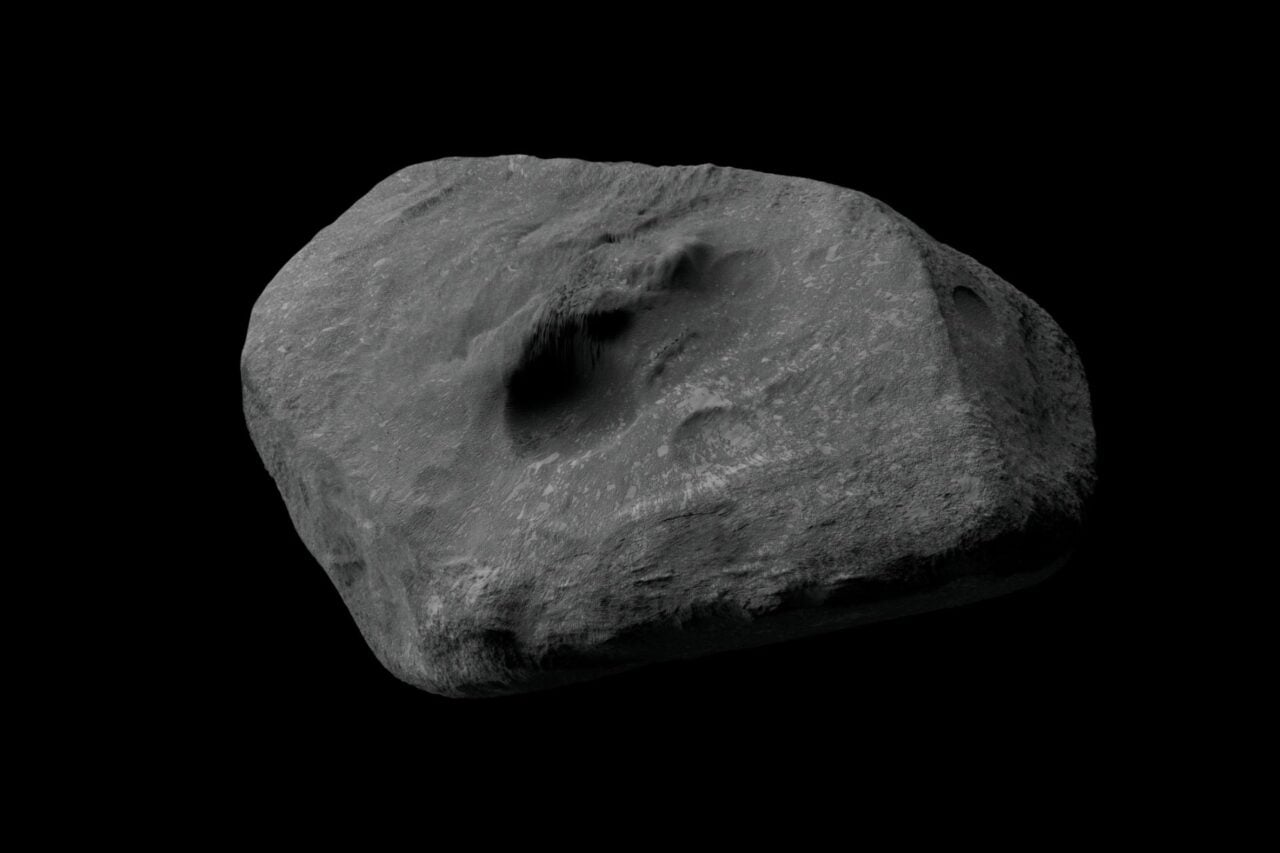
A team of researchers from Spain’s Institute of Space Sciences has identified promising targets for future asteroid mining missions. Their findings, published in the Monthly Notices of the Royal Astronomical Society, reveal that certain carbon-rich asteroids could provide valuable resources, potentially transforming space exploration and industry.
This research comes at a time when advances in rocket technology are paving the way for new business models in space. The quest for asteroid mining, once relegated to the realm of science fiction, is gaining momentum as teams like the one led by graduate student Pau Grèbol Tomás analyze samples from a variety of space rocks. Tomás remarked, “It sounds like science fiction, but it also seemed like science fiction when the first sample return missions were being planned thirty years ago.”
Exploring the Viability of Asteroid Mining
Asteroid mining has yet to be fully realized. While NASA’s OSIRIS-REx mission successfully extracted material from an asteroid and returned it to Earth, scaling this process for commercial use poses significant challenges. Advanced propulsion systems and in-orbit refining technologies must be developed and tested to make large-scale mining feasible.
California-based startup AstroForge is at the forefront of this effort. In April 2023, the company launched its first mission aimed at demonstrating its ability to refine asteroid materials in space. Despite losing contact with its spacecraft, the endeavor underscores the growing interest in asteroid mining as a viable industry.
The potential for profitable extraction remains uncertain. Tomás emphasized the need for research to determine which asteroids can be mined profitably. “Most asteroids have relatively small abundances of precious elements,” he noted.
Scientific Analysis of Carbonaceous Chondrites
The research team characterized 28 meteorite samples and conducted a detailed chemical analysis using mass spectrometry. This analysis focused on six common types of carbonaceous chondrites—meteorites known for their carbon, water, and organic compounds. Lead author and astrophysicist, Josep M. Trigo-Rodríguez, explained that studying these meteorites is essential for understanding the chemical composition and evolutionary history of their parent asteroids.
The researchers discovered that a specific type of asteroid rich in the minerals olivine and spinel could be ideal targets for future missions. These minerals are associated with the presence of iron, nickel, gold, platinum, and rare earth elements, all of which are highly sought after in various industries.
As efforts continue to unlock the potential of asteroid mining, the feasibility of these ventures will depend on both technological advancements and the economic viability of extracting resources from space. The findings from the Institute of Space Sciences represent a significant step toward understanding which asteroids hold the most promise for future mining operations, potentially opening a new frontier in resource extraction and space exploration.

Fort Worth Hosts Exciting Hometown Half Marathon and 5K/10K Events

Navy Launches Five New Acquisition Executives to Streamline Processes

Utah Mother Kouri Richins Accused of Poisoning Husband for Money

Oil Prices Surge, U.S. Stocks Show Unexpected Resilience

Cyberpunk 2077 Set for PS5 Pro Performance Update Soon

Home Assistant Tool Enhances Server Health with Global Score

Oregon Ducks Unveil Nature-Inspired Nike Air Max 95 Sneakers

Trump Administration’s Legal Tactics Intensify at the Border

Sandia Scientists Recognized as National Academy of Inventors Fellows

Libraries Challenge Rising E-Book Costs Amid Growing Demand

Tyreek Hill Responds to Tua Tagovailoa’s Comments on Team Dynamics

San Francisco Hosts Unique Contest to Identify “Performative Males”

Liverpool Secures Agreement to Sign Young Striker Will Wright

Astronomers Unveil Insights from β Pictoris b Using GRAVITY

University of Hawaiʻi Joins $25M AI Initiative to Monitor Disasters

Save Your Split Tomatoes: Expert Tips for Gardeners

Elon Musk Sculpture Travels From Utah to Yosemite National Park

California Develops New Method to Monitor Toxic Algal Blooms
-
 Lifestyle10 months ago
Libraries Challenge Rising E-Book Costs Amid Growing Demand
-
 Sports9 months ago
Tyreek Hill Responds to Tua Tagovailoa’s Comments on Team Dynamics
-
 Science8 months ago
San Francisco Hosts Unique Contest to Identify “Performative Males”
-
 Sports9 months ago
Liverpool Secures Agreement to Sign Young Striker Will Wright
-
 Science7 months ago
Astronomers Unveil Insights from β Pictoris b Using GRAVITY
-
Science6 months ago
University of Hawaiʻi Joins $25M AI Initiative to Monitor Disasters
-
 Lifestyle9 months ago
Save Your Split Tomatoes: Expert Tips for Gardeners
-
 Sports9 months ago
Elon Musk Sculpture Travels From Utah to Yosemite National Park
-
 Science9 months ago
California Develops New Method to Monitor Toxic Algal Blooms
-

 Lifestyle9 months ago
Princess Beatrice’s Daughter Athena Joins Siblings at London Parade
-

 Sports9 months ago
Bubba Wallace Makes History with Brickyard 400 Victory
-

 World9 months ago
Winter Storms Lash New South Wales with Snow, Flood Risks