
Science
Astronomers Uncover the Moon’s Age and Future Movement

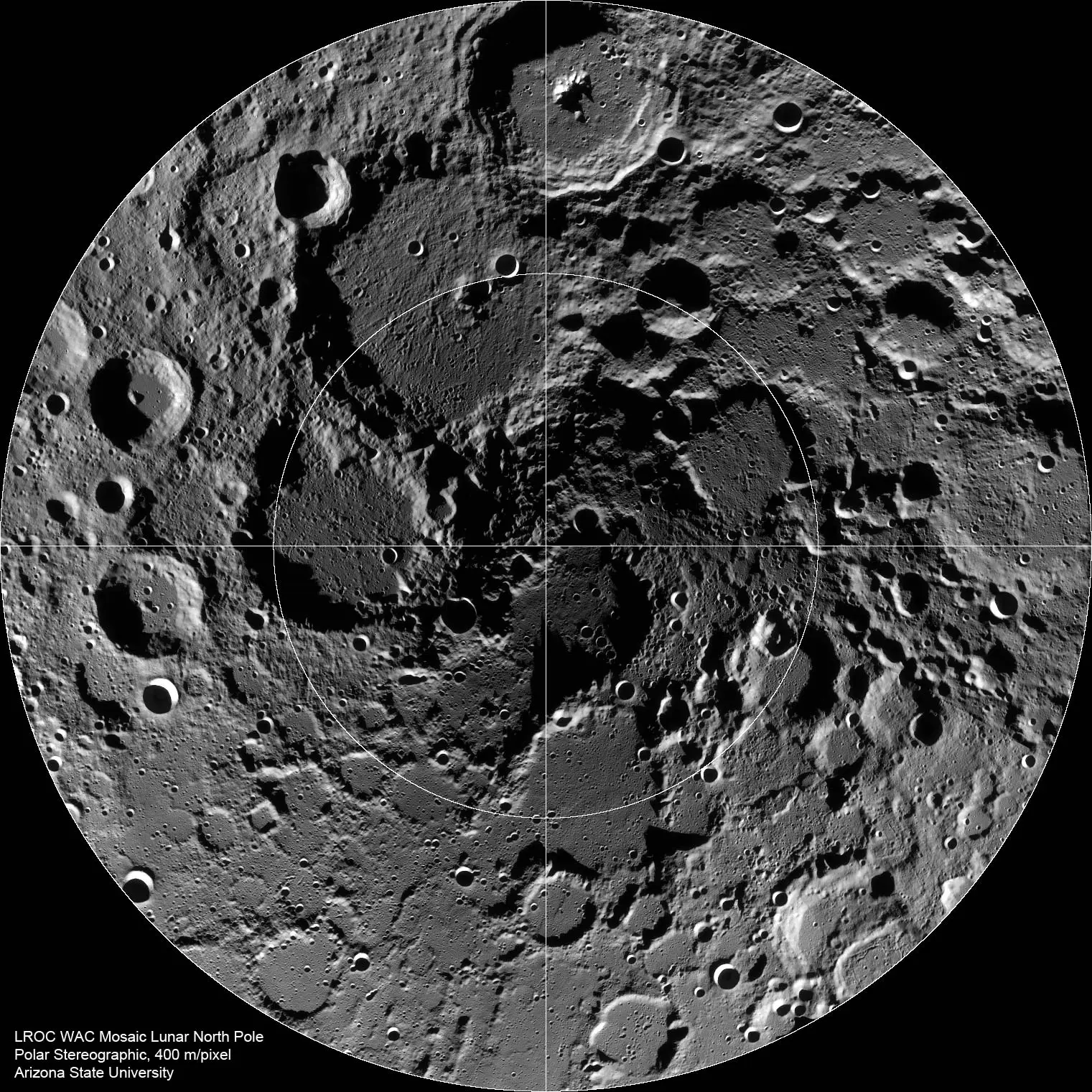
Astronomers have made significant strides in understanding the age and geological history of the Moon. By employing a method known as crater counting, they can determine the relative ages of lunar surfaces and their features. This technique reveals that the Moon, along with other celestial bodies like Mercury and some outer system moons, has remained geologically inactive for billions of years. As comets and asteroids strike these surfaces, they create craters that persist due to the absence of air, water, or tectonic activity.
The process involves comparing the density of craters across various regions. Areas with more craters are typically older, indicating they solidified earlier than less-cratered regions. For instance, the dark basaltic plains, known as the maria, have fewer craters, suggesting they are younger than the lighter highlands, which exhibit a higher crater density.
One of the critical breakthroughs in dating lunar features came from the Apollo missions. These missions not only returned samples of lunar rocks but also allowed scientists to employ radiometric dating. This method measures the abundances of radioactive elements and their decay products, allowing researchers to calculate the absolute ages of various lunar locations. The edge of the Sea of Tranquility, where Apollo 11 landed, is over 3.5 billion years old, while some highland regions are nearly 4 billion years old.
The youngest features on the Moon include large impact craters like Copernicus, Tycho, and Cone, all of which are under 1 billion years old. The Giordano Bruno crater, named after the Italian philosopher, is particularly young at approximately 4 million years old. These impacts are so energetic that they effectively erase existing features, creating a fresh surface.
With these absolute ages established, scientists can apply the crater count method to other celestial bodies, such as Mercury and Callisto, enhancing our understanding of their geological timelines, even without direct exploration.
In addition to dating features, the Apollo missions revealed that the Moon is gradually moving away from Earth. This hypothesis dates back to the early 1800s when Sir Edmund Halley analyzed ancient eclipse records and noticed a slow drift. The theory suggested that lunar tides raised by Earth could pull the Moon into a higher orbit.
In 1962, researcher James Faller proposed a method to enhance distance measurement by placing reflectors on the Moon’s surface. This innovation allowed for precise laser measurements between the Earth and the Moon. Current data indicates that the Moon is receding at an average rate of 3.8 centimeters per year. While this rate may seem modest, over millions of years, it will have significant implications for Earth-Moon dynamics.
Eventually, the combination of the Moon’s retreat and the Sun’s increasing brightness will result in a future where total solar eclipses are impossible. These changes, though gradual, highlight the dynamic nature of celestial interactions and the importance of ongoing astronomical research. As scientists continue to uncover the Moon’s history, they offer a glimpse into the complex relationships within our solar system, urging us to appreciate the beauty of solar eclipses while we can still experience them.

Fort Worth Hosts Exciting Hometown Half Marathon and 5K/10K Events

Navy Launches Five New Acquisition Executives to Streamline Processes

Utah Mother Kouri Richins Accused of Poisoning Husband for Money

Oil Prices Surge, U.S. Stocks Show Unexpected Resilience

Cyberpunk 2077 Set for PS5 Pro Performance Update Soon

Home Assistant Tool Enhances Server Health with Global Score

Oregon Ducks Unveil Nature-Inspired Nike Air Max 95 Sneakers

Trump Administration’s Legal Tactics Intensify at the Border

Sandia Scientists Recognized as National Academy of Inventors Fellows

Libraries Challenge Rising E-Book Costs Amid Growing Demand

Tyreek Hill Responds to Tua Tagovailoa’s Comments on Team Dynamics

San Francisco Hosts Unique Contest to Identify “Performative Males”

Liverpool Secures Agreement to Sign Young Striker Will Wright

Astronomers Unveil Insights from β Pictoris b Using GRAVITY

Save Your Split Tomatoes: Expert Tips for Gardeners

University of Hawaiʻi Joins $25M AI Initiative to Monitor Disasters

Elon Musk Sculpture Travels From Utah to Yosemite National Park

Princess Beatrice’s Daughter Athena Joins Siblings at London Parade
-
 Lifestyle9 months ago
Libraries Challenge Rising E-Book Costs Amid Growing Demand
-
 Sports9 months ago
Tyreek Hill Responds to Tua Tagovailoa’s Comments on Team Dynamics
-
 Science8 months ago
San Francisco Hosts Unique Contest to Identify “Performative Males”
-
 Sports9 months ago
Liverpool Secures Agreement to Sign Young Striker Will Wright
-
 Science7 months ago
Astronomers Unveil Insights from β Pictoris b Using GRAVITY
-
 Lifestyle9 months ago
Save Your Split Tomatoes: Expert Tips for Gardeners
-
Science6 months ago
University of Hawaiʻi Joins $25M AI Initiative to Monitor Disasters
-
 Sports9 months ago
Elon Musk Sculpture Travels From Utah to Yosemite National Park
-
 Lifestyle9 months ago
Princess Beatrice’s Daughter Athena Joins Siblings at London Parade
-

 Science9 months ago
California Develops New Method to Monitor Toxic Algal Blooms
-

 Sports9 months ago
Bubba Wallace Makes History with Brickyard 400 Victory
-

 World9 months ago
Winter Storms Lash New South Wales with Snow, Flood Risks