
Health
Minnesota’s New Paid Leave Program Sparks Division Among Leaders

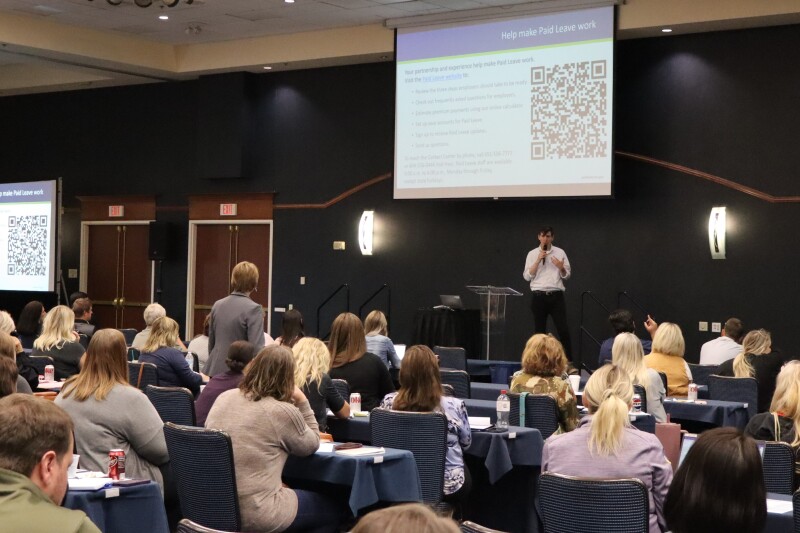
EAST GRAND FORKS – A new paid leave program set to take effect on January 1, 2024, in Minnesota has prompted mixed reactions among government officials and business leaders. The Paid Family and Medical Leave (PFML) program, signed into law by Minnesota Governor Tim Walz in 2023, promises up to 12 weeks of paid medical leave and 12 weeks of paid family leave, capping at a total of 20 weeks annually with job protection. While some view this initiative as a potential boon for both employee well-being and business retention, others express concerns regarding its impact on small businesses and workforce shortages.
The PFML program aims to support employees facing serious health events or family crises. According to Greg Norfleet, a director at the Minnesota Department of Employment and Economic Development (DEED), the program is designed for situations that require significant time off. “This program covers serious health care conditions and life events that employees will need time off to deal with,” Norfleet explained. This initiative is financed through a combination of surplus funds and payroll taxes, with a standard tax rate of 0.88% split between employers and employees.
Concerns about the program’s implications on small businesses have been voiced by several local leaders. Mark Johnson, a state senator from East Grand Forks, criticized the government’s ability to manage the program effectively, suggesting that it may burden businesses rather than assist them. “We are going to build a 400-person bureaucracy… (Democrats) are wreaking havoc on this whole concept,” he stated. He believes that the existing third-party market could offer comparable benefits without the added complexities of government management.
Nancy Miller, owner of an HR consulting firm representing over 85 businesses statewide, echoed Johnson’s sentiments. She raised alarms about the program’s financial impact, suggesting that costs could exceed expectations not only in taxes but also due to the administrative burden placed on small businesses. “I think 20 weeks is excessive. I think 12 weeks would have been fine,” Miller remarked, questioning the incentive for employees to return to work quickly if they receive substantial wage replacement during their leave.
Conversely, some business owners view the program as beneficial. Penny Stai, owner of River Cinema in East Grand Forks, expressed that the cost of the program, estimated to be around $8,800 annually for her business, is manageable. “It’s not that much money. As long as it’s a good thing for the staff and our community, that’s fine with me,” she said. Stai acknowledged potential staffing challenges, noting that small businesses may struggle to fill positions during extended leaves.
Concerns about staffing shortages were also highlighted by Ryan Wall, vice president of administration for American Crystal Sugar, which operates three facilities in Minnesota. Wall noted that the company already offers short-term disability benefits that align with the state’s plan. He anticipates that the PFML program could lead to increased staff shortages, necessitating greater overtime costs and additional hiring to maintain operations.
To address these staffing challenges, the Minnesota government is introducing Small Employer Assistance Grants, which cover up to $3,000 per leave and a maximum of $6,000 per employee annually. Norfleet emphasized that for an employee to qualify for medical leave under PFML, a serious health condition lasting at least seven days must be certified by a healthcare professional. Family leave qualifications are broader, encompassing time off for the arrival of a new child or caring for a family member with a serious health condition.
The PFML program makes Minnesota the 13th state to establish a paid leave initiative in the absence of a federal program. Norfleet highlighted the positive outcomes observed in other states, citing that 87% of employers reported no increased costs associated with such programs, and 99% noted a positive or neutral effect on their operations.
As the PFML program approaches its launch, it continues to divide opinion among Minnesota’s business leaders. Maggie Brockling, East Grand Forks Economic Development Director, noted that local perspectives vary widely. Some businesses see the program as a beneficial tool for employee retention, while others view it as an added financial burden.
Despite the differing opinions, the PFML program will commence in the new year and will be administered by a new state agency within DEED. Norfleet noted that the agency aims to provide transparency and actionable information to employers, including the creation of an online leave administrator portal to facilitate leave requests and coordination with state agencies. All businesses in Minnesota, excluding self-employed individuals, tribal nations, and federal government positions, will be enrolled in the program.

Fort Worth Hosts Exciting Hometown Half Marathon and 5K/10K Events

Navy Launches Five New Acquisition Executives to Streamline Processes

Utah Mother Kouri Richins Accused of Poisoning Husband for Money

Oil Prices Surge, U.S. Stocks Show Unexpected Resilience

Cyberpunk 2077 Set for PS5 Pro Performance Update Soon

Home Assistant Tool Enhances Server Health with Global Score

Oregon Ducks Unveil Nature-Inspired Nike Air Max 95 Sneakers

Trump Administration’s Legal Tactics Intensify at the Border

Sandia Scientists Recognized as National Academy of Inventors Fellows

Libraries Challenge Rising E-Book Costs Amid Growing Demand

Tyreek Hill Responds to Tua Tagovailoa’s Comments on Team Dynamics

San Francisco Hosts Unique Contest to Identify “Performative Males”

Liverpool Secures Agreement to Sign Young Striker Will Wright

Astronomers Unveil Insights from β Pictoris b Using GRAVITY

Save Your Split Tomatoes: Expert Tips for Gardeners

University of Hawaiʻi Joins $25M AI Initiative to Monitor Disasters

Elon Musk Sculpture Travels From Utah to Yosemite National Park

Princess Beatrice’s Daughter Athena Joins Siblings at London Parade
-
 Lifestyle9 months ago
Libraries Challenge Rising E-Book Costs Amid Growing Demand
-
 Sports9 months ago
Tyreek Hill Responds to Tua Tagovailoa’s Comments on Team Dynamics
-
 Science8 months ago
San Francisco Hosts Unique Contest to Identify “Performative Males”
-
 Sports9 months ago
Liverpool Secures Agreement to Sign Young Striker Will Wright
-
 Science7 months ago
Astronomers Unveil Insights from β Pictoris b Using GRAVITY
-
 Lifestyle9 months ago
Save Your Split Tomatoes: Expert Tips for Gardeners
-
Science6 months ago
University of Hawaiʻi Joins $25M AI Initiative to Monitor Disasters
-
 Sports9 months ago
Elon Musk Sculpture Travels From Utah to Yosemite National Park
-
 Lifestyle9 months ago
Princess Beatrice’s Daughter Athena Joins Siblings at London Parade
-

 Science9 months ago
California Develops New Method to Monitor Toxic Algal Blooms
-

 Sports9 months ago
Bubba Wallace Makes History with Brickyard 400 Victory
-

 World9 months ago
Winter Storms Lash New South Wales with Snow, Flood Risks