
Entertainment
DC’s Flash Villains: Five Characters That Should Fade Away

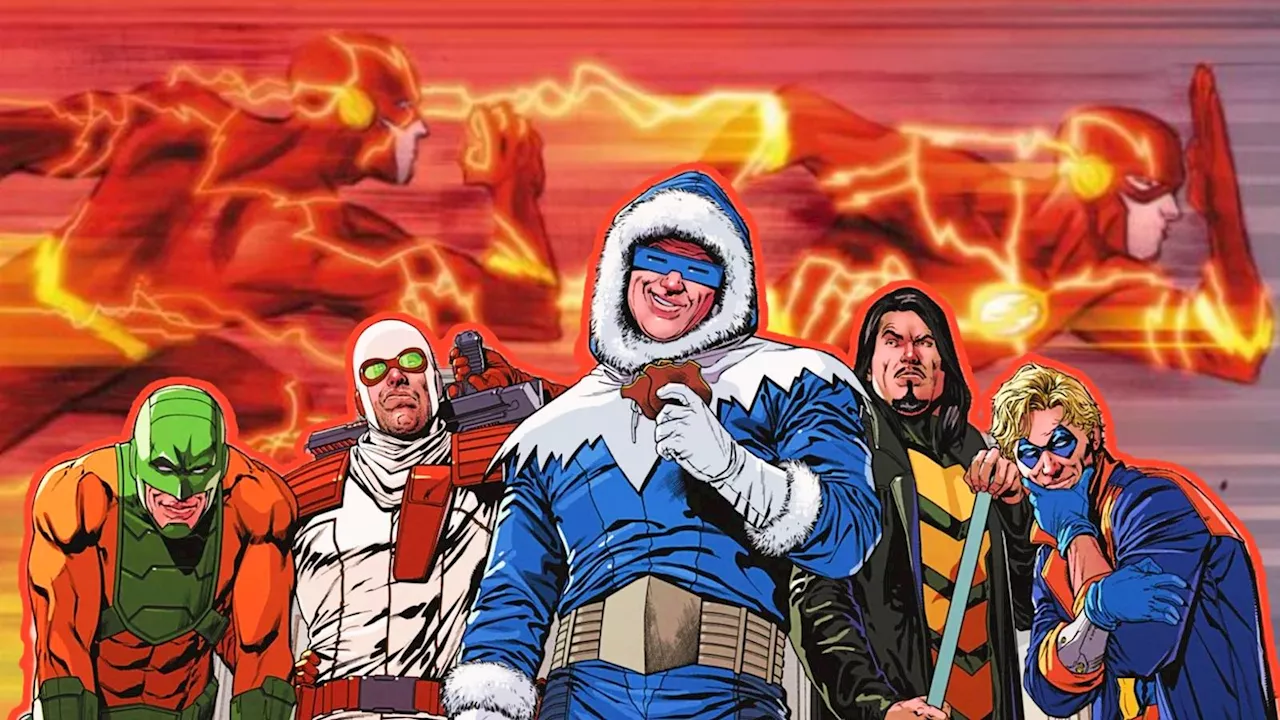
The enduring legacy of the Flash in DC Comics has brought forth a multitude of villains over the years. While characters like Reverse-Flash and Captain Cold have become iconic, some adversaries have failed to resonate with audiences and should be left behind. This article examines five Flash villains whose narratives fell flat and left little impact.
Cobalt Blue: A Convoluted Rival
Created by writer Mark Waid, Cobalt Blue was introduced as a potential major foe for the Flash family. Despite this ambition, the character struggled to connect with readers. Originating as a twin brother of Barry Allen, raised by the Thawnes after a medical mishap, Cobalt Blue’s backstory felt overly complicated. The narrative of secret twins and generational rivalry was already explored with Reverse-Flash, making Cobalt Blue’s introduction feel redundant.
His design also failed to impress, lacking the distinctive flair that often characterizes memorable villains. As such, Cobalt Blue remains an underwhelming entry in the Flash’s rogues’ gallery.
Griffin Grey: A Missed Opportunity
The relationship between heroes and their former friends turning into foes is a classic trope in comics. The story of Griffin Grey, who was Bart Allen’s roommate turned villain, was intended to explore this dynamic. However, it suffered from poor character development and narrative inconsistencies.
Griffin’s descent into villainy hinged on an out-of-character moment from Jay Garrick, the original Flash, who chastised Griffin for his actions. This conflict felt forced and did not align with Jay’s established persona as a mentor. Ultimately, Griffin’s character served only as a plot device to teach Bart a lesson about power and responsibility, leading to a lack of interest in his potential resurrection.
Plunder: A Disappointing Reveal
Another example is Plunder, a character developed by Geoff Johns and Angel Unzueta. Initially shrouded in mystery, Plunder was intended to be a compelling villain, resembling Keystone City detective Jared Morillo. Yet, the drawn-out reveal that Plunder was a mirror world version of Morillo ultimately disappointed readers.
By the time his true nature was disclosed, interest had waned. Plunder’s fate at the hands of Zoom left ambiguity regarding his impact, indicating a lack of investment in the character’s development.
Colonel Computron: An Outdated Concept
Introduced in 1981 through Carey Bates and Carmine Infantino, Colonel Computron exemplified a character that failed to resonate with modern audiences. Originating from a toy designer’s desire for revenge after receiving a meager bonus, the character’s premise seemed dated, relying heavily on early video game aesthetics.
The concept lacked depth and originality, rendering Colonel Computron more of a novelty than a genuine threat to the Flash. A more innovative approach to his design and narrative could have transformed him into a memorable villain.
Daniel West: A Controversial Replacement
The impact of the New 52 reboot on the Flash mythos was significant, particularly through the character of Daniel West. This iteration of Reverse-Flash, being the son of Iris West’s father, introduced a controversial backstory that alienated fans.
Daniel’s narrative, which included pushing his father down the stairs and later attempting to kill him to amend for past mistakes, was met with criticism. Fans were displeased with the portrayal of established characters, especially in relation to the legacy of Wally West. Ultimately, Daniel’s character was largely erased during the DC Rebirth, highlighting the negative reception of his storyline.
In conclusion, while the Flash’s rogues’ gallery features some of the most compelling villains in comic history, certain characters like Cobalt Blue, Griffin Grey, Plunder, Colonel Computron, and Daniel West have not stood the test of time. Their convoluted backstories, lack of development, and overall unappealing designs have rendered them forgettable. As the Flash continues to evolve, it may be time for these characters to remain in the shadows of comic history.

Fort Worth Hosts Exciting Hometown Half Marathon and 5K/10K Events

Navy Launches Five New Acquisition Executives to Streamline Processes

Utah Mother Kouri Richins Accused of Poisoning Husband for Money

Oil Prices Surge, U.S. Stocks Show Unexpected Resilience

Cyberpunk 2077 Set for PS5 Pro Performance Update Soon

Home Assistant Tool Enhances Server Health with Global Score

Oregon Ducks Unveil Nature-Inspired Nike Air Max 95 Sneakers

Trump Administration’s Legal Tactics Intensify at the Border

Sandia Scientists Recognized as National Academy of Inventors Fellows

Libraries Challenge Rising E-Book Costs Amid Growing Demand

Tyreek Hill Responds to Tua Tagovailoa’s Comments on Team Dynamics

Liverpool Secures Agreement to Sign Young Striker Will Wright

San Francisco Hosts Unique Contest to Identify “Performative Males”

Save Your Split Tomatoes: Expert Tips for Gardeners

Elon Musk Sculpture Travels From Utah to Yosemite National Park

Astronomers Unveil Insights from β Pictoris b Using GRAVITY

Princess Beatrice’s Daughter Athena Joins Siblings at London Parade

Winter Storms Lash New South Wales with Snow, Flood Risks
-
 Lifestyle9 months ago
Libraries Challenge Rising E-Book Costs Amid Growing Demand
-
 Sports8 months ago
Tyreek Hill Responds to Tua Tagovailoa’s Comments on Team Dynamics
-
 Sports8 months ago
Liverpool Secures Agreement to Sign Young Striker Will Wright
-
 Science8 months ago
San Francisco Hosts Unique Contest to Identify “Performative Males”
-
 Lifestyle8 months ago
Save Your Split Tomatoes: Expert Tips for Gardeners
-
 Sports9 months ago
Elon Musk Sculpture Travels From Utah to Yosemite National Park
-
 Science6 months ago
Astronomers Unveil Insights from β Pictoris b Using GRAVITY
-
 Lifestyle8 months ago
Princess Beatrice’s Daughter Athena Joins Siblings at London Parade
-
 World8 months ago
Winter Storms Lash New South Wales with Snow, Flood Risks
-
 Science5 months ago
University of Hawaiʻi Joins $25M AI Initiative to Monitor Disasters
-

 Sports8 months ago
Bubba Wallace Makes History with Brickyard 400 Victory
-

 Science9 months ago
Trump Administration Moves to Repeal Key Climate Regulation