
Top Stories
Rutgers Scientists Pioneer RNA Nanotechnology for Cancer Treatment

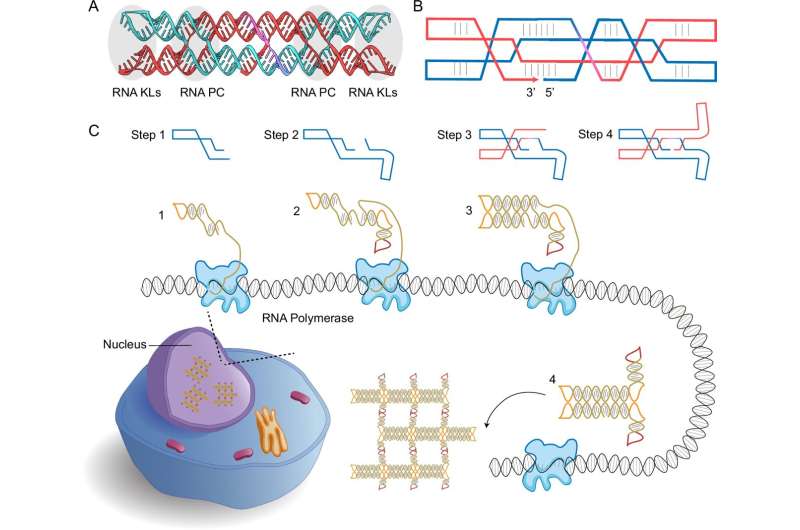
Scientists at Rutgers University–Newark have made a significant advancement in cancer treatment through the development of a groundbreaking RNA-based nanotechnology. This innovative approach enables the self-assembly of RNA structures inside living human cells, offering a promising avenue for halting the spread of harmful cells. The findings were published on February 4, 2026, in the journal Nature Communications.
Led by Professor Fei Zhang from the Department of Chemistry and Professor Jean-Pierre Etchegaray from the Department of Biological Sciences, the interdisciplinary team is currently testing this technology on human cancer cells. While the study is still ongoing, the implications of their research could revolutionize biomedical treatments.
Innovative RNA Technology
The newly developed nanostructure technology functions as a molecular tool for both research and therapeutic applications. Its ability to be customized allows it to target multiple harmful genes and proteins simultaneously. Zhang highlighted that the research provides a new design strategy for creating artificial RNA structures with programmable functions, enhancing their potential utility in medical science.
This technology operates on the principle that all cells rely on instructions encoded in DNA. In this context, RNA acts like software, transmitting the necessary commands to synthesize proteins. Instead of merely delivering pre-constructed molecules into cells, the Rutgers team has devised a method to introduce a synthetic DNA template that guides the cell to create its own RNA structures. These engineered RNA constructs can fold into specific shapes and localize within the cell as needed.
The assembled RNA behaves like tiny Lego blocks, autonomously finding and connecting with each other. This flexibility is particularly beneficial for targeting cancer, where multiple malfunctioning genes often work in concert to drive the disease’s progression.
Targeting Cancer Cells
The researchers aim to leverage this technology to specifically target and disable cancer stem cells, which play a critical role in tumor growth and metastasis. Etchegaray noted, “We are trying right now to use this technology to target oncogenes and see if we can disable cancer stem cells, which are considered cancer initiating and propagating cells with therapeutic resistance.” This targeted approach promises to minimize damage to healthy cells while effectively addressing the cancerous ones.
Unlike most current RNA-based therapies that focus on single molecules, this new platform can engage multiple targets at once. Zhang and Etchegaray emphasized that this capability opens unprecedented opportunities for biotechnological applications. Furthermore, the technology can be adapted to enhance existing RNA therapies, integrating functional sequences from traditional treatments into their novel platform.
The team has secured a provisional patent for their invention and is actively seeking partners, investors, and collaborators to expedite further development and clinical trials. “If we can have more people on board and attract different interest from partners, that will make this go forward faster,” Zhang remarked. The researchers also indicated that this nanotechnology could potentially be customized to address other diseases caused by the misexpression of genes and proteins.
As the study progresses, the Rutgers-Newark team hopes to pave the way for a new era in cancer treatment, one where targeted therapies can drastically improve patient outcomes.
The findings are documented in the article by Xu Chang et al., titled “Designer RNA nanostructures co-transcribed and self-assembled inside human cell nuclei,” published in Nature Communications (2025).

Knowles CEO Jeffrey Niew Divests Shares Worth Nearly $2 Million

Echo Financial Expands Advisory Services to Higher Education Sector

Luc Besson’s ‘Dracula’ Reimagines Classic Tale as Romantic Drama

Citigroup Lowers IQVIA Price Target to $200, Analysts Respond

Discover Detroit: A Walking Tour Through Its Rich History

Study Reveals Off-Pump CABG Reduces Perioperative Risks

NY Pie Expands with New Location in Nashville’s Capitol View

Rogers Communication vs. PT Telekomunikasi: A Comparative Analysis

Researchers Uncover Genetic Links to Parkinson’s Disease Risk

Libraries Challenge Rising E-Book Costs Amid Growing Demand

Tyreek Hill Responds to Tua Tagovailoa’s Comments on Team Dynamics

Liverpool Secures Agreement to Sign Young Striker Will Wright

Save Your Split Tomatoes: Expert Tips for Gardeners

San Francisco Hosts Unique Contest to Identify “Performative Males”

Princess Beatrice’s Daughter Athena Joins Siblings at London Parade

Elon Musk Sculpture Travels From Utah to Yosemite National Park

Winter Storms Lash New South Wales with Snow, Flood Risks

Trump Administration Moves to Repeal Key Climate Regulation
-
 Lifestyle7 months ago
Libraries Challenge Rising E-Book Costs Amid Growing Demand
-
 Sports6 months ago
Tyreek Hill Responds to Tua Tagovailoa’s Comments on Team Dynamics
-
 Sports6 months ago
Liverpool Secures Agreement to Sign Young Striker Will Wright
-
 Lifestyle6 months ago
Save Your Split Tomatoes: Expert Tips for Gardeners
-
 Science6 months ago
San Francisco Hosts Unique Contest to Identify “Performative Males”
-
 Lifestyle6 months ago
Princess Beatrice’s Daughter Athena Joins Siblings at London Parade
-
 Sports7 months ago
Elon Musk Sculpture Travels From Utah to Yosemite National Park
-
 World6 months ago
Winter Storms Lash New South Wales with Snow, Flood Risks
-
 Science7 months ago
Trump Administration Moves to Repeal Key Climate Regulation
-

 Business7 months ago
SoFi Technologies Shares Slip 2% Following Insider Stock Sale
-

 Science7 months ago
New Tool Reveals Link Between Horse Coat Condition and Parasites
-

 Sports6 months ago
Bubba Wallace Makes History with Brickyard 400 Victory