
Science
Scientists Discover “Fire Amoeba” Thriving in Extreme Heat

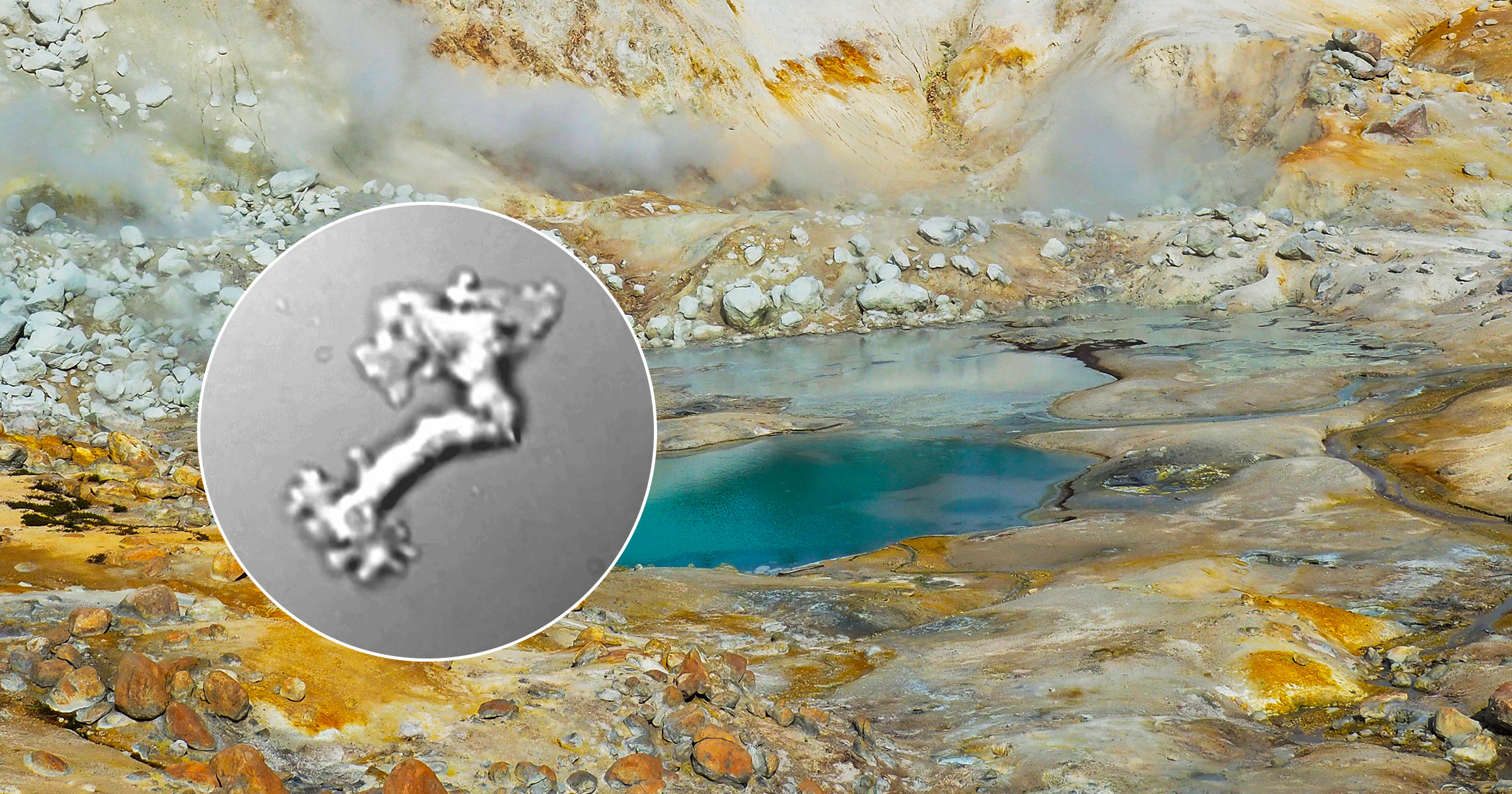
A team of scientists from the United States and Europe has identified a previously unknown organism capable of thriving in extreme temperatures found in Lassen Volcanic National Park, California. The newly discovered single-celled organism, named Incendiamoeba cascadensis, or “fire amoeba,” can survive and reproduce at temperatures as high as 145.4 degrees Fahrenheit. This groundbreaking finding challenges existing beliefs about the limits of life for complex organisms.
Located in the Cascade Range, Lassen Volcanic National Park features geothermal wonders, including boiling water pools and bubbling mud, with temperatures reaching up to 464 degrees Fahrenheit. While these extreme conditions make survival difficult for most life forms, the fire amoeba has set a new record for the upper temperature limit of complex organisms. The findings were detailed in a study published in the journal Nature, although the research has yet to undergo peer review.
Researchers noted that prokaryotes, such as bacteria and archaea, have long been regarded as the most resilient life forms, thriving at temperatures between 149 and 221 degrees Fahrenheit. The highest recorded temperature a prokaryote has endured is 251.6 degrees Fahrenheit, held by the archaean Methanopyrus kandleri. In contrast, eukaryotic organisms, including plants, animals, fungi, and the newly discovered fire amoeba, were previously thought to have a maximum survival temperature of around 131 to 140 degrees Fahrenheit.
New Insights into Eukaryotic Survival
According to Angela Oliverio, a microbiologist at Syracuse University and co-author of the study, the discovery of the fire amoeba necessitates a reevaluation of the potential for eukaryotic cells to withstand extreme temperatures. Oliverio indicated that the team found the organism in a relatively unremarkable hot spring stream, which contrasts with the acidic pools common throughout the park.
Co-author Beryl Rappaport described the discovery site as “the most uninteresting geothermal feature” in Lassen. Initially, investigations of the water yielded no signs of life. However, when the researchers introduced nutrients and heated the samples to 134.6 degrees Fahrenheit, the unknown amoeba began to move and replicate. As temperatures increased to 145.4 degrees Fahrenheit, the amoeba continued to thrive, further defying expectations.
At temperatures above 158 degrees Fahrenheit, the organism enters a dormant state known as encystment, where it forms a protective cyst-like shell to withstand harsh conditions. When temperatures cool, the amoeba can emerge from this dormant state to grow and reproduce again.
Potential for Future Research and Applications
The researchers also analyzed the genome of the fire amoeba, revealing a wealth of genes associated with proteostasis, genome stability, and environmental sensing. This insight points to the biological mechanisms that enable the amoeba to endure extreme heat.
The implications of this discovery extend to future research opportunities. The team believes there may be more heat-loving eukaryotes waiting to be discovered, as they only examined a single stream. “We looked in one stream,” Oliverio noted. “Maybe we got extremely lucky, but we really don’t think that’s the case.”
Furthermore, the proteins found within the fire amoeba could be valuable for developing “thermostable proteins” with various applications in the biotechnology sector.
The research also opens up exciting possibilities for understanding how life can exist in extreme environments beyond Earth. Scientists speculate that similar organisms could inhabit ancient riverbeds or ice caps on Mars, aligning with the idea that, as actor Jeff Goldblum famously said in the film “Jurassic Park,” “Life finds a way.”
In summary, the discovery of the fire amoeba not only expands our understanding of the limits of life on Earth but also paves the way for further exploration into the resilience of eukaryotic organisms in extreme conditions.

Texas Tech Claims First Big 12 Championship with Dominant Win

Hawaiian Airlines Restructures Fleet Ahead of 2025 Merger Changes

Reacher Season 4: A Golden Opportunity for Character Returns

FanDuel Offers Major Promotions for College Football Championships

Reacher Season 4 Sparks Hope for Roscoe and Former Allies’ Return

Exploring the Long-Term Effects of Trauma on Physical Health

Texas Tech Celebrates Historic Big 12 Championship Win

Musk Urges Dismantling of EU After $140 Million Fine on X

Supreme Court to Review Trump’s Controversial Citizenship Order

Libraries Challenge Rising E-Book Costs Amid Growing Demand

Tyreek Hill Responds to Tua Tagovailoa’s Comments on Team Dynamics

Liverpool Secures Agreement to Sign Young Striker Will Wright

Save Your Split Tomatoes: Expert Tips for Gardeners

Princess Beatrice’s Daughter Athena Joins Siblings at London Parade

San Francisco Hosts Unique Contest to Identify “Performative Males”

Winter Storms Lash New South Wales with Snow, Flood Risks

Trump Administration Moves to Repeal Key Climate Regulation

SoFi Technologies Shares Slip 2% Following Insider Stock Sale
-
 Lifestyle5 months ago
Libraries Challenge Rising E-Book Costs Amid Growing Demand
-
 Sports4 months ago
Tyreek Hill Responds to Tua Tagovailoa’s Comments on Team Dynamics
-
 Sports4 months ago
Liverpool Secures Agreement to Sign Young Striker Will Wright
-
 Lifestyle4 months ago
Save Your Split Tomatoes: Expert Tips for Gardeners
-
 Lifestyle4 months ago
Princess Beatrice’s Daughter Athena Joins Siblings at London Parade
-
 Science4 months ago
San Francisco Hosts Unique Contest to Identify “Performative Males”
-
 World4 months ago
Winter Storms Lash New South Wales with Snow, Flood Risks
-
 Science5 months ago
Trump Administration Moves to Repeal Key Climate Regulation
-
 Business5 months ago
SoFi Technologies Shares Slip 2% Following Insider Stock Sale
-

 Science5 months ago
New Tool Reveals Link Between Horse Coat Condition and Parasites
-

 Sports4 months ago
Elon Musk Sculpture Travels From Utah to Yosemite National Park
-
 Science5 months ago
New Study Confirms Humans Transported Stonehenge Bluestones