
Science
Neanderthals Mastered Fire 400,000 Years Ago, Study Reveals

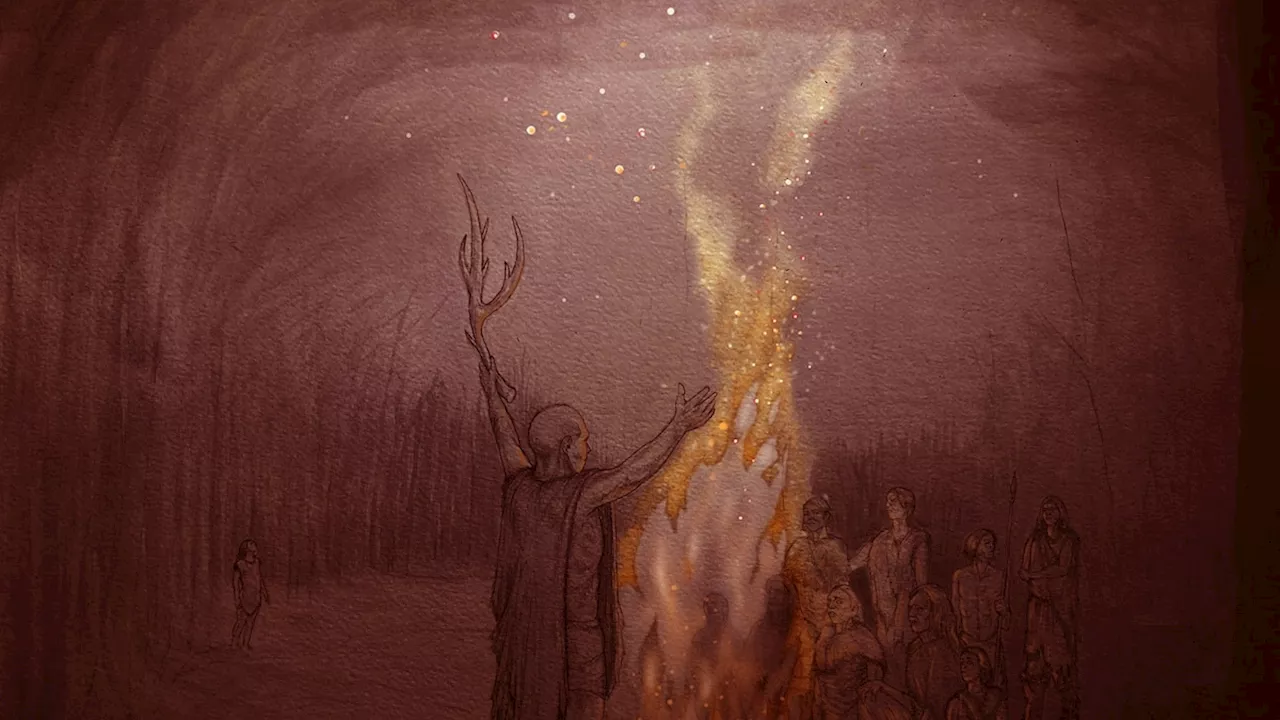
A groundbreaking study has uncovered evidence suggesting that Neanderthals were intentionally lighting fires in England around 400,000 years ago. This research, led by a team of archaeologists at the East Farm site near Barnham, Suffolk, pushes back the timeline for the emergence of fire-making by over 350,000 years compared to previous findings.
Recent excavations at East Farm revealed a combination of archaeological evidence, including reddened silt, heat-distorted flint handaxes, and fragments of iron pyrite. According to Dr. Paul Ashton, a British Museum archaeologist, this is the first time pyrite has been found in the area during over three decades of fieldwork. He explained, “The only time we find it is alongside heat-shattered handaxes and baked sediments,” indicating a significant connection to fire use.
Determining whether ancient humans created flames deliberately is complex, as natural and human-made fire traces can appear similar. If validated, these findings would indicate that Neanderthals had independently mastered the use of fire, separate from early modern humans.
The East Farm site, located approximately 70 miles northeast of London, has been the focus of excavations since 2013. It was first identified over a century ago when clay extraction revealed stone tools dating back to the Lower Paleolithic period. During this time, early human ancestors likely inhabited the region, which was then connected to continental Europe via a land bridge.
While other prehistoric sites have shown signs of fire use, researchers have been unable to confirm whether these fires were ignited intentionally or were a result of natural occurrences. The discovery of iron pyrite at East Farm marks a significant advancement in understanding fire-making practices of Neanderthals.
Dr. Ashton highlighted the unique geomagnetic changes observed in the sediments around the hearth, suggesting repeated fire-making at the site. Infrared spectroscopy indicated that the sediments had been heated, at times exceeding 700 degrees Celsius (approximately 1,300 degrees Fahrenheit). Additionally, traces of polycyclic aromatic hydrocarbons, typically produced by burning wood, were found, reinforcing the idea that the fires were man-made.
The research team combined various scientific techniques to strengthen their findings. Dr. Ashton noted that the evidence implies an established knowledge of fire-making among early hominins: “If the ability to light fires is so ancient, we can assume that the mastery of fire and its habitual use dates back even further.”
Fire has played a crucial role in human evolution, impacting biological and social development. It provided protection, warmth, and a means to cook food, while also featuring prominently in various cultural belief systems. Previous theories suggested that Neanderthals may have learned fire-making from early modern humans, but the findings from East Farm suggest a different narrative—one where Neanderthals were capable of mastering fire independently.
While the research has garnered attention, some experts urge caution. Dr. Michael Sandgathe, who was not part of the study, acknowledged the compelling nature of the findings but expressed skepticism regarding the evidence of deliberate fire-making. He suggested that while the analysis is thorough, the claim might be overstated, stating, “The current evidence still suggests that this would have been an exceedingly rare thing.”
The ongoing research at East Farm promises to deepen understanding of early human behavior and culture. As studies continue, archaeologists hope to confirm these findings and explore the implications of early fire-making on human evolution.

Bulgaria’s Government Resigns Amid Mass Protests Before Eurozone Entry

Absolute Joker Seizes Batman’s Legacy in Shocking Twist

Physician-Developed Eyelash Serum Promises Rapid Transformation

Time Magazine Names Architects of AI as 2025 Person of the Year

Venezuelan Leader María Corina Machado Honored with Nobel Peace Prize

New Algorithm Tackles Space Debris with Innovative Approach

Chris Culliver to Transfer from UNC Football Program This Winter

China Targets Domestic Demand Growth in 2026 Policy Roadmap

Chris Culliver Announces Transfer from UNC Football Program

Libraries Challenge Rising E-Book Costs Amid Growing Demand

Tyreek Hill Responds to Tua Tagovailoa’s Comments on Team Dynamics

Liverpool Secures Agreement to Sign Young Striker Will Wright

Save Your Split Tomatoes: Expert Tips for Gardeners

Princess Beatrice’s Daughter Athena Joins Siblings at London Parade

San Francisco Hosts Unique Contest to Identify “Performative Males”

Winter Storms Lash New South Wales with Snow, Flood Risks

Trump Administration Moves to Repeal Key Climate Regulation

SoFi Technologies Shares Slip 2% Following Insider Stock Sale
-
 Lifestyle5 months ago
Libraries Challenge Rising E-Book Costs Amid Growing Demand
-
 Sports4 months ago
Tyreek Hill Responds to Tua Tagovailoa’s Comments on Team Dynamics
-
 Sports5 months ago
Liverpool Secures Agreement to Sign Young Striker Will Wright
-
 Lifestyle5 months ago
Save Your Split Tomatoes: Expert Tips for Gardeners
-
 Lifestyle4 months ago
Princess Beatrice’s Daughter Athena Joins Siblings at London Parade
-
 Science4 months ago
San Francisco Hosts Unique Contest to Identify “Performative Males”
-
 World4 months ago
Winter Storms Lash New South Wales with Snow, Flood Risks
-
 Science5 months ago
Trump Administration Moves to Repeal Key Climate Regulation
-
 Business5 months ago
SoFi Technologies Shares Slip 2% Following Insider Stock Sale
-

 Science5 months ago
New Tool Reveals Link Between Horse Coat Condition and Parasites
-

 Sports5 months ago
Elon Musk Sculpture Travels From Utah to Yosemite National Park
-

 Science5 months ago
New Study Confirms Humans Transported Stonehenge Bluestones