
Science
Mars Time Dilation: Exploring Time’s Quirks for Future Missions

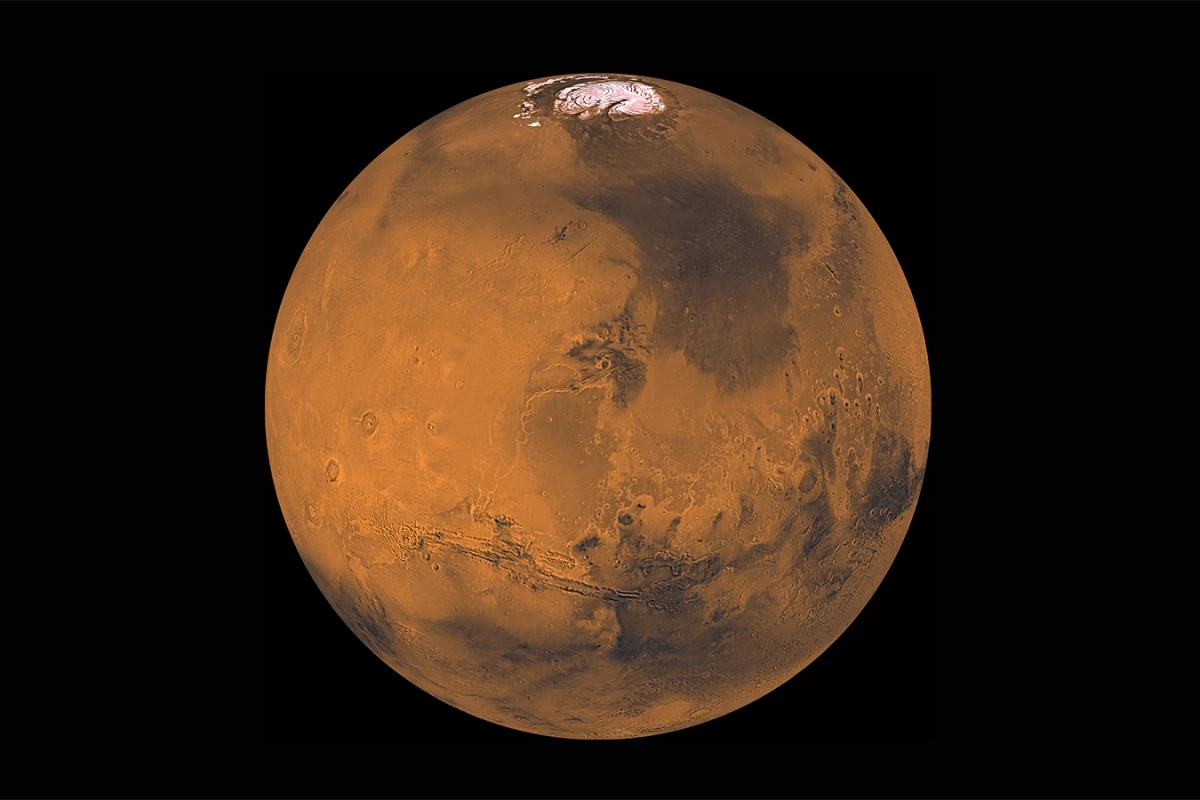
As humanity prepares for more ambitious missions to Mars, researchers have uncovered that time on the Red Planet runs faster than on Earth, a phenomenon tied to the Theory of Relativity. Specifically, time on Mars accelerates by approximately 477 microseconds per day. This finding, published in The Astronomical Journal, has significant implications for future human colonization and communication systems.
Understanding this time dilation effect requires a grasp of the complexities of relativity, a theory developed by Albert Einstein that reshaped our understanding of space and time. The principle of time dilation suggests that time can pass at different rates depending on relative velocity and gravitational fields. For instance, GPS satellites in orbit experience time differently due to their speed and altitude, an effect that Neil Ashby, a GPS pioneer, highlighted during the satellite’s initial deployment.
When satellites travel at about 28,000 km/h (17,500 mph), they experience time running faster by 7 microseconds per day compared to clocks on Earth. This discrepancy is further compounded by gravitational effects, resulting in a net gain of 38 microseconds per day for the satellites. Without adjustments, GPS technology would yield navigation errors of several miles daily.
Complexities of Time on Mars
The intricacies of time on Mars are notably more complex than those on the Moon. Research conducted by Ashby and colleague Bijunath Patla at the National Institute of Standards and Technology (NIST) reveals that calculations for Martian time must consider multiple gravitational influences, including those from the Earth, the Moon, the Sun, and Mars itself. This “four-body problem” complicates the equations needed to define time on Mars.
Unlike the Moon, which has a relatively stable orbit, Mars exhibits a more elliptical orbit around the Sun, resulting in variations in its speed throughout the Martian year. Additionally, Mars experiences a wobble in its orbit, further complicating time calculations. The result of these factors is that time passes 477 microseconds faster per day on Mars, with fluctuations of up to 266 microseconds that must be accounted for throughout the year.
Implications for Future Missions
As humanity aims to establish a presence on Mars, the implications of this time dilation phenomenon are profound. Adjusting for time discrepancies will be vital, especially as communications between Earth and Martian missions become increasingly complex. Unlike the relatively simple adjustments made for GPS satellites, Mars necessitates dynamic corrections to account for its unique time variations.
The challenge extends beyond mere calculations; it also involves creating a robust communication infrastructure—an “internet of the Solar System.” This system must adapt to the ever-changing time dynamics to ensure accurate data transmission and reception.
Ashby emphasized the importance of this research, stating, “It’s good to know for the first time what is happening on Mars timewise. Nobody knew that before.” The study enhances our understanding of relativity and its influence on how clocks tick, as well as the fundamental nature of time itself.
As space exploration continues to advance, accounting for the nuances of time across different celestial bodies will be crucial for successful missions. With plans for human colonies on Mars gaining momentum, understanding these temporal differences will not only improve operational efficiency but also enrich our knowledge of the universe.

Emma Stone Nominated for Golden Globe for ‘Bugonia’

David Spade Critiques ‘Christmas-Free’ Tree Lightings at Mall Ceremony

UK Imposes New Restrictions on Wood-Burning Stoves Amid Pollution Concerns

Gonzaga Dominates North Florida 109-58 Without Graham Ike

Pearl Harbor’s 84th Anniversary Marks First Ceremony Without Survivors

Ford Partners with Renault to Launch New Electric Vehicles

Medina Council Honors Paul Rose for 16 Years of Service

Massachusetts Poll Reveals Strong Support for School Cellphone Ban

Mars Time Dilation: Exploring Time’s Quirks for Future Missions

Libraries Challenge Rising E-Book Costs Amid Growing Demand

Tyreek Hill Responds to Tua Tagovailoa’s Comments on Team Dynamics

Liverpool Secures Agreement to Sign Young Striker Will Wright

Save Your Split Tomatoes: Expert Tips for Gardeners

Princess Beatrice’s Daughter Athena Joins Siblings at London Parade

San Francisco Hosts Unique Contest to Identify “Performative Males”

Winter Storms Lash New South Wales with Snow, Flood Risks

Trump Administration Moves to Repeal Key Climate Regulation

SoFi Technologies Shares Slip 2% Following Insider Stock Sale
-
 Lifestyle5 months ago
Libraries Challenge Rising E-Book Costs Amid Growing Demand
-
 Sports4 months ago
Tyreek Hill Responds to Tua Tagovailoa’s Comments on Team Dynamics
-
 Sports4 months ago
Liverpool Secures Agreement to Sign Young Striker Will Wright
-
 Lifestyle4 months ago
Save Your Split Tomatoes: Expert Tips for Gardeners
-
 Lifestyle4 months ago
Princess Beatrice’s Daughter Athena Joins Siblings at London Parade
-
 Science4 months ago
San Francisco Hosts Unique Contest to Identify “Performative Males”
-
 World4 months ago
Winter Storms Lash New South Wales with Snow, Flood Risks
-
 Science5 months ago
Trump Administration Moves to Repeal Key Climate Regulation
-
 Business5 months ago
SoFi Technologies Shares Slip 2% Following Insider Stock Sale
-

 Science5 months ago
New Tool Reveals Link Between Horse Coat Condition and Parasites
-

 Sports5 months ago
Elon Musk Sculpture Travels From Utah to Yosemite National Park
-

 Science5 months ago
New Study Confirms Humans Transported Stonehenge Bluestones