
Science
Ancient Scribes Illuminate Solar Eclipse Secrets from 709 BCE

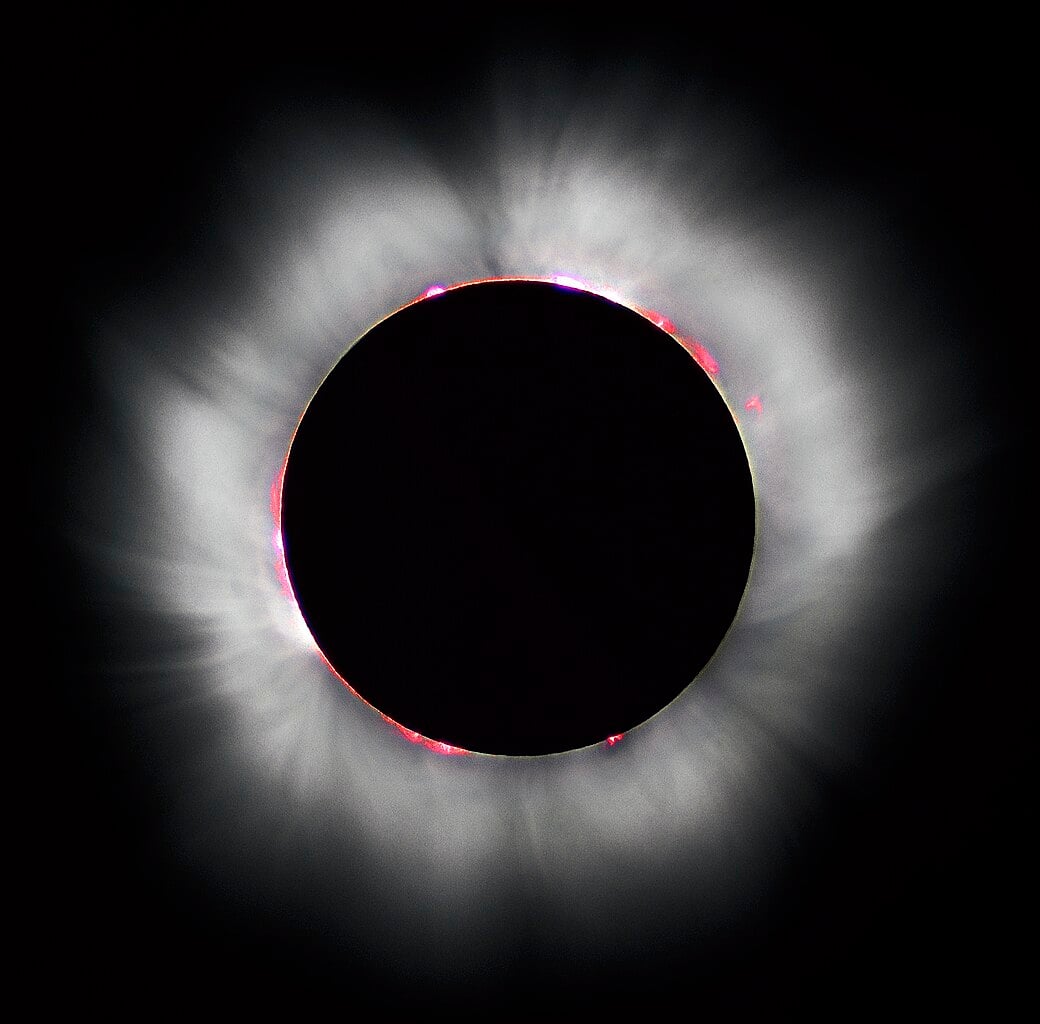
In the summer of 709 BCE, scribes at the Lu Duchy Court in ancient China witnessed a remarkable event: a total solar eclipse. Their detailed observations recorded that during totality, the Sun appeared “completely yellow above and below,” a description that has now provided modern scientists with insights into Earth’s rotation and solar activity from nearly three millennia ago.
This ancient account, preserved in the Spring and Autumn Annals, is considered one of the earliest datable records of a total solar eclipse. Yet, when contemporary researchers attempted to verify the event through modern astronomical calculations, they encountered a significant challenge. The data indicated that a total eclipse should not have been visible from Qufu, the city where these observations were made.
To resolve this discrepancy, a research team led by Hisashi Hayakawa from Nagoya University revisited the coordinates used in previous studies. They discovered that earlier researchers had mistakenly situated the ancient site eight kilometers away from its actual location. This small geographical miscalculation had systemic effects on all subsequent analyses.
With the corrected coordinates, the researchers recalibrated their calculations and accurately determined Earth’s rotation speed during the eclipse. They found that, over 2,700 years ago, the planet was spinning slightly faster than it does today. This variation is primarily attributed to tidal friction caused by the Moon’s gravitational influence, which has gradually decelerated Earth’s rotation over millennia.
The ancient scribes’ description of the Sun during the eclipse offered further intrigue. The phrase “completely yellow above and below” likely refers to the solar corona, the Sun’s faint outer atmosphere that is only visible during total eclipses. If correct, this account represents one of the earliest surviving written descriptions of this phenomenon.
The morphology described by these early observers hints at significant solar activity in 709 BCE. The Sun operates on an approximately 11-year cycle of varying activity levels, occasionally disrupted by extended quiet periods known as grand minima, during which sunspots nearly vanish. Radiocarbon measurements from tree rings indicate that the Sun had just emerged from such a quiet period that lasted from 808 to 717 BCE.
The description of the corona aligns with radiocarbon data, suggesting that by 709 BCE, the Sun was returning to regular activity cycles and nearing its peak activity. Trees absorb radiocarbon during photosynthesis, and the concentration of this isotope reflects cosmic ray levels, which diminish when solar activity rises. The correlation between ancient human observations and modern scientific analysis underscores the validity of both methods.
The exceptional astronomical records of ancient China are a testament to the meticulous record-keeping practices of dynasties that employed experts to monitor the skies for omens. These celestial observations were thought to reflect the conduct of the imperial court, leading to systematic documentation that now offers invaluable data spanning centuries.
In summary, the work of researchers like Hisashi Hayakawa not only clarifies historical events but also bridges the gap between ancient knowledge and contemporary scientific inquiry. Their findings highlight the importance of accurate geographical data and the rich legacy of ancient Chinese astronomy, which continues to inform our understanding of the universe today.

Homeowners Advised to Use Dish Soap for Winter Drain Issues

Minnesota’s Somali Community Under Investigation for Fraud Allegations

Researchers Unearth Architectural Secrets of Ancient Pompeii

Final Season of The Boys Promises Intense Showdown with Homelander

Trump Faces Voter Discontent as Economic Promises Falter

Reese Witherspoon Reveals Her Secret to Radiant Skin

Tech Blogger Unveils Fleet of Flying Sword Drones in Chengdu

Texas Democrats Navigate Turbulent Political Landscape Post-Ruling

New Study on Moonquakes Raises Concerns for NASA’s Lunar Plans

Libraries Challenge Rising E-Book Costs Amid Growing Demand

Tyreek Hill Responds to Tua Tagovailoa’s Comments on Team Dynamics

Liverpool Secures Agreement to Sign Young Striker Will Wright

Save Your Split Tomatoes: Expert Tips for Gardeners

Princess Beatrice’s Daughter Athena Joins Siblings at London Parade

San Francisco Hosts Unique Contest to Identify “Performative Males”

Winter Storms Lash New South Wales with Snow, Flood Risks

Trump Administration Moves to Repeal Key Climate Regulation

SoFi Technologies Shares Slip 2% Following Insider Stock Sale
-
 Lifestyle5 months ago
Libraries Challenge Rising E-Book Costs Amid Growing Demand
-
 Sports4 months ago
Tyreek Hill Responds to Tua Tagovailoa’s Comments on Team Dynamics
-
 Sports4 months ago
Liverpool Secures Agreement to Sign Young Striker Will Wright
-
 Lifestyle4 months ago
Save Your Split Tomatoes: Expert Tips for Gardeners
-
 Lifestyle4 months ago
Princess Beatrice’s Daughter Athena Joins Siblings at London Parade
-
 Science4 months ago
San Francisco Hosts Unique Contest to Identify “Performative Males”
-
 World4 months ago
Winter Storms Lash New South Wales with Snow, Flood Risks
-
 Science5 months ago
Trump Administration Moves to Repeal Key Climate Regulation
-
 Business5 months ago
SoFi Technologies Shares Slip 2% Following Insider Stock Sale
-

 Science5 months ago
New Tool Reveals Link Between Horse Coat Condition and Parasites
-

 Sports4 months ago
Elon Musk Sculpture Travels From Utah to Yosemite National Park
-
 Science5 months ago
New Study Confirms Humans Transported Stonehenge Bluestones