
Politics
Trump Acknowledges “Good Meeting” with Putin, No Breakthrough Yet

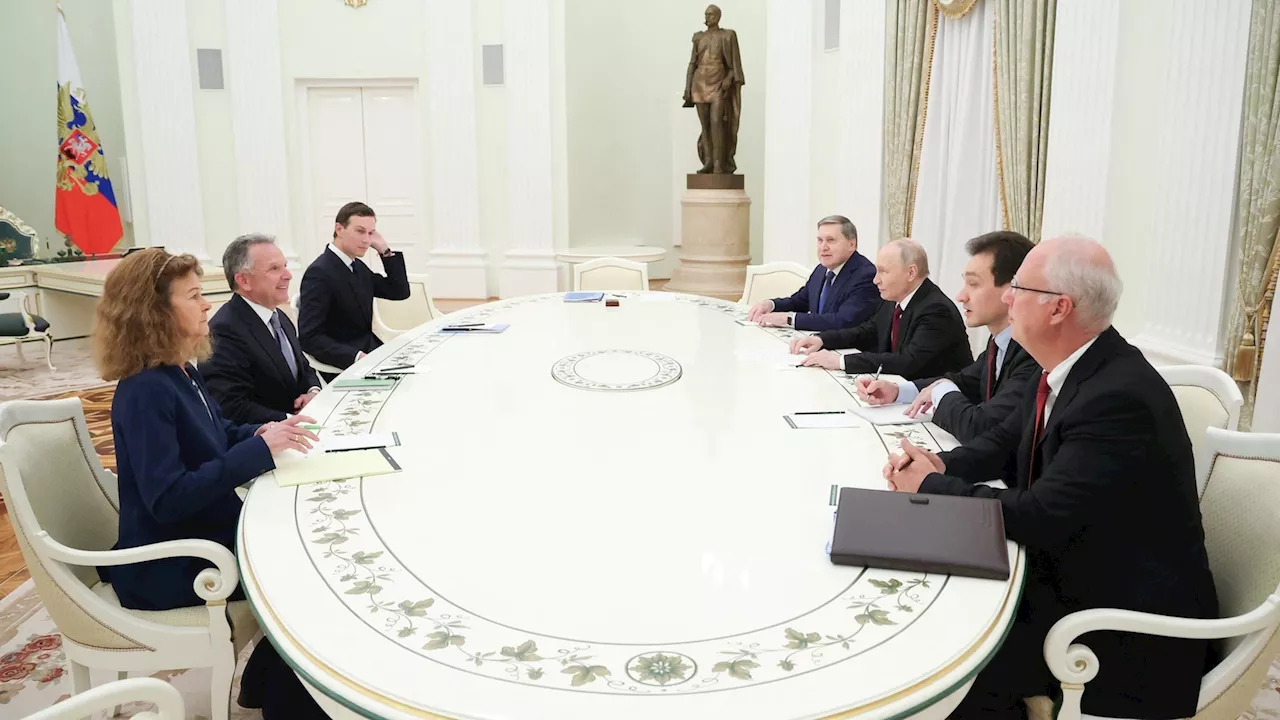
President Donald Trump stated that U.S. Special Envoy Steve Witkoff and his son-in-law Jared Kushner had a “reasonably good meeting” with Russian President Vladimir Putin on December 2, 2025, despite no significant breakthroughs emerging from the discussions. The meeting, held at the Kremlin in Moscow, aimed to address the ongoing conflict between Russia and Ukraine, which has persisted for nearly four years.
In remarks to reporters at the Oval Office, Trump expressed uncertainty about the outcomes of the discussions, saying, “What comes out of that meeting? I can’t tell you.” He emphasized that both parties must be willing to negotiate, stating, “It does take two to tango.” Trump conveyed that there was an impression from the meeting that Putin is interested in ending the war, noting, “He would like to end the war; that was their impression.”
During the meeting, which also included Kremlin aides Kirill Dmitriev and Yuri Ushakov, Witkoff and Kushner engaged in extensive discussions with Putin. Trump highlighted that the Russian leader would prefer returning to a state of normalcy, mentioning, “I think he’d like to be trading with the United States of America, frankly, instead of, you know, losing thousands of soldiers a week.”
Following the Kremlin talks, Witkoff and Kushner invited Ukrainian National Security and Defense Council Secretary Rustem Umerov to Miami for further discussions. Despite the lack of immediate agreements from the Moscow meeting, both U.S. and Russian representatives agreed to maintain confidentiality regarding the specifics of their negotiations.
Ushakov later provided insights into the discussions, indicating that while no compromise had been reached, some American proposals appeared somewhat acceptable. He noted, “We agreed on some things … while others caused criticism,” affirming the necessity of continued dialogue.
The ongoing negotiations come amidst significant geopolitical challenges. Ukraine’s President Volodymyr Zelenskyy stated that Ukrainian representatives would meet with European leaders in Brussels to evaluate the outcomes of the recent talks. Key issues remain unresolved, particularly concerning territory concessions and security guarantees, which are pivotal to any peace agreement.
U.S. Secretary of State Marco Rubio, who did not participate in the Moscow discussions, reported on the situation, confirming that while “some progress” had been made regarding the truce proposal, a satisfactory resolution is still distant. He underscored a major sticking point: Russia’s insistence on Ukrainian forces withdrawing from the entire Donbas region, a demand that Ukraine has consistently rejected.
Rubio elaborated on the complexity of the negotiations, stating, “What they’re literally fighting over now is about a 30-to-50 kilometer space and the 20% of the Donetsk region that remains.” He called for a framework that ensures Ukraine’s long-term sovereignty and independence while allowing its economy to recover.
Experts have raised concerns about the Kremlin’s willingness to engage meaningfully in the peace process. John Hardie, Deputy Director at the Foundation for Defense of Democracies, stated, “The Kremlin remains unwilling to make the compromises necessary for a settlement Kyiv can live with.” He emphasized that without a shift in Moscow’s stance, achieving a peace deal would remain unlikely.
Rubio reiterated the need for Ukraine and Russia to resolve their differences independently, stating, “At the end of the day, it’s not up to us. It’s not our war.” He stressed that the responsibility lies with both nations to achieve a durable peace agreement.
In a broader context, Michael Froman, President of the Council on Foreign Relations, cautioned that Putin may prefer a protracted diplomatic process, which could serve his interests while the conflict continues. He stated, “He wants to have a broader conversation about Russia’s reintegration with the West and relations with the United States.”
As the diplomatic efforts unfold, the international community watches closely, hoping for a resolution to a conflict that has caused significant humanitarian and geopolitical repercussions. The next steps in the peace negotiations will be crucial in determining the future of Ukraine and its relationship with Russia, as well as the role of the United States in facilitating dialogue.

Tech Blogger Unveils Fleet of Flying Sword Drones in Chengdu

Texas Democrats Navigate Turbulent Political Landscape Post-Ruling

New Study on Moonquakes Raises Concerns for NASA’s Lunar Plans

UFC 323 Highlights: Wrestling Observer Radio Recaps Key Events

Soldiers Claim Control in Benin Ahead of Presidential Election

Microsoft Responds to Feedback, Makes Windows 11 AI Actions Optional

Roivant Sciences Hits 52-Week High; Analysts Adjust Ratings

Robert Eggers’ ‘The Northman’ Thrives on Netflix After Theatrical Struggles

Ensight Skills Center Empowers Coloradans with Vision Loss

Libraries Challenge Rising E-Book Costs Amid Growing Demand

Tyreek Hill Responds to Tua Tagovailoa’s Comments on Team Dynamics

Liverpool Secures Agreement to Sign Young Striker Will Wright

Save Your Split Tomatoes: Expert Tips for Gardeners

Princess Beatrice’s Daughter Athena Joins Siblings at London Parade

San Francisco Hosts Unique Contest to Identify “Performative Males”

Winter Storms Lash New South Wales with Snow, Flood Risks

Trump Administration Moves to Repeal Key Climate Regulation

SoFi Technologies Shares Slip 2% Following Insider Stock Sale
-
 Lifestyle5 months ago
Libraries Challenge Rising E-Book Costs Amid Growing Demand
-
 Sports4 months ago
Tyreek Hill Responds to Tua Tagovailoa’s Comments on Team Dynamics
-
 Sports4 months ago
Liverpool Secures Agreement to Sign Young Striker Will Wright
-
 Lifestyle4 months ago
Save Your Split Tomatoes: Expert Tips for Gardeners
-
 Lifestyle4 months ago
Princess Beatrice’s Daughter Athena Joins Siblings at London Parade
-
 Science4 months ago
San Francisco Hosts Unique Contest to Identify “Performative Males”
-
 World4 months ago
Winter Storms Lash New South Wales with Snow, Flood Risks
-
 Science5 months ago
Trump Administration Moves to Repeal Key Climate Regulation
-
 Business5 months ago
SoFi Technologies Shares Slip 2% Following Insider Stock Sale
-

 Science5 months ago
New Tool Reveals Link Between Horse Coat Condition and Parasites
-

 Sports4 months ago
Elon Musk Sculpture Travels From Utah to Yosemite National Park
-

 Science5 months ago
New Study Confirms Humans Transported Stonehenge Bluestones