
Politics
Supreme Court Ruling on TikTok Sparks Controversy Over Power Limits

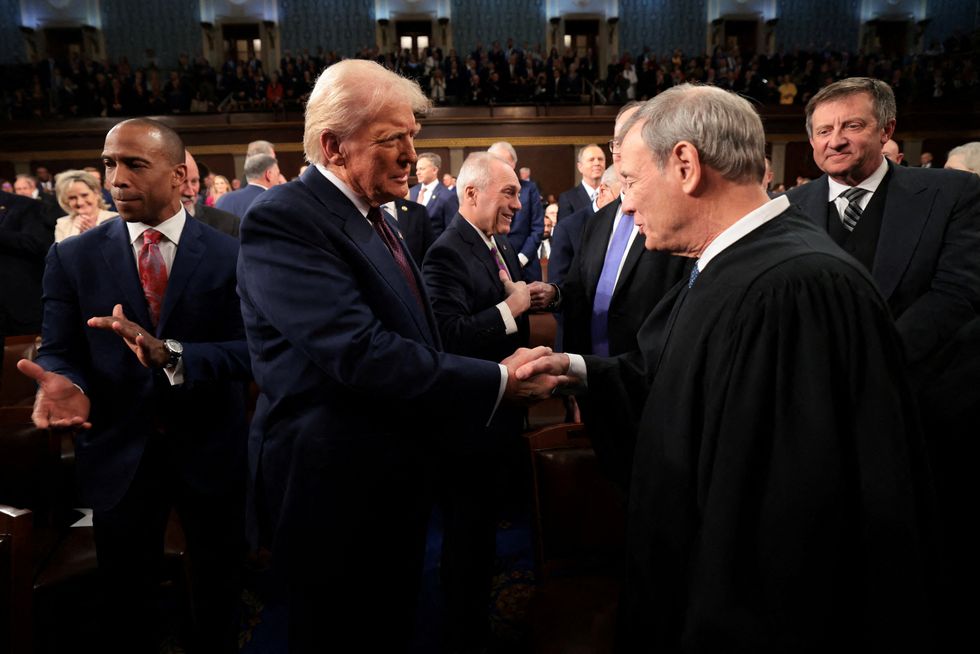
The Supreme Court’s recent decision to support President Donald Trump in efforts to ban the Chinese social media app TikTok has raised concerns among legal experts. Columnists Evelyn Douek and Jameel Jaffer, in an op-ed for the Guardian, argue that this ruling may have unintentionally granted the Trump administration unprecedented power, potentially infringing on constitutional limits.
In their analysis, Douek and Jaffer emphasize that a more thorough examination of the government’s national security claims could have altered the court’s decision. They contend that the TikTok ban exemplifies how the government can manipulate national security rhetoric to gain authority beyond constitutional boundaries. According to them, the court’s failure to critically assess these arguments has set a troubling precedent.
During his first term, Trump and several members of Congress advocated for the TikTok ban, citing national security concerns over the Chinese government allegedly collecting data from American users. Critics, however, argue that the ban was also motivated by a growing unease regarding TikTok’s exposure of young Americans to content related to the Israeli military actions in Gaza. Many lawmakers expressed apprehension that such exposure could diminish support for Israel among younger demographics.
As of 2024, the political landscape has shifted. Trump has reversed his stance and is now engaged in discussions to facilitate a deal for Oracle Corporation, a company founded by tech billionaire and Trump ally Larry Ellison, to acquire a majority stake in TikTok’s U.S. operations. This deal comes amidst rising concerns over censorship on the platform, particularly regarding content related to Israel.
The Supreme Court’s decision to accept the argument that TikTok poses a national security threat has disappointed those who view it as a violation of the First Amendment. Douek and Jaffer argue that the court’s ruling could lead to broader implications, with future cases potentially facing similar scrutiny under the guise of national security. They assert, “The court would have understood that the ban itself created a serious national security risk—the kind of risk the modern First Amendment was intended to prevent.”
As the Trump administration navigates these complex issues, it has extended deadlines for ByteDance, TikTok’s parent company, to divest its U.S. operations. The initial deadline was set in 2024 by President Joe Biden, mandating divestiture or facing a ban. Since then, Trump has postponed enforcement multiple times, raising concerns about the executive power to shut down the app at any moment.
The evolving situation surrounding TikTok underscores the intricate balance between national security and freedom of expression. As the Supreme Court prepares to address additional cases where the government invokes national security to limit speech, the TikTok ruling will likely remain a focal point in discussions about governmental power and constitutional rights.

NFL Veterans Step Up to Logan Paul’s $1 Million Boxing Challenge

Arab States Urgently Request U.S. Missile Supplies Amid Iran Threats

Sarah J. Maas Updates Fans on A Court of Thorns and Roses Adaptation

Ojala Islamic Center Opens as Midwest’s First Latino Mosque

Iraq War Veteran Critiques Trump’s Iran Strategy as Unnecessary Conflict

University of Waterloo Launches Interactive Safety Map for Dating Apps

Premier League Teams Set Transfer Priorities Ahead of Summer Window

European Economy Faces Uncertainty Due to Iran Conflict, Says ECB

Seth MacFarlane’s ‘Ted’ Season 2 Concludes with Humor and Heart

Libraries Challenge Rising E-Book Costs Amid Growing Demand

Tyreek Hill Responds to Tua Tagovailoa’s Comments on Team Dynamics

Liverpool Secures Agreement to Sign Young Striker Will Wright

San Francisco Hosts Unique Contest to Identify “Performative Males”

Save Your Split Tomatoes: Expert Tips for Gardeners

Princess Beatrice’s Daughter Athena Joins Siblings at London Parade

Elon Musk Sculpture Travels From Utah to Yosemite National Park

Winter Storms Lash New South Wales with Snow, Flood Risks

Trump Administration Moves to Repeal Key Climate Regulation
-
 Lifestyle7 months ago
Libraries Challenge Rising E-Book Costs Amid Growing Demand
-
 Sports7 months ago
Tyreek Hill Responds to Tua Tagovailoa’s Comments on Team Dynamics
-
 Sports7 months ago
Liverpool Secures Agreement to Sign Young Striker Will Wright
-
 Science6 months ago
San Francisco Hosts Unique Contest to Identify “Performative Males”
-
 Lifestyle7 months ago
Save Your Split Tomatoes: Expert Tips for Gardeners
-
 Lifestyle7 months ago
Princess Beatrice’s Daughter Athena Joins Siblings at London Parade
-
 Sports7 months ago
Elon Musk Sculpture Travels From Utah to Yosemite National Park
-
 World7 months ago
Winter Storms Lash New South Wales with Snow, Flood Risks
-
 Science8 months ago
Trump Administration Moves to Repeal Key Climate Regulation
-
 Business7 months ago
SoFi Technologies Shares Slip 2% Following Insider Stock Sale
-

 Science8 months ago
New Tool Reveals Link Between Horse Coat Condition and Parasites
-
 Sports7 months ago
Bubba Wallace Makes History with Brickyard 400 Victory