
Politics
Supreme Court Considers Overturning Landmark Decision on Executive Power

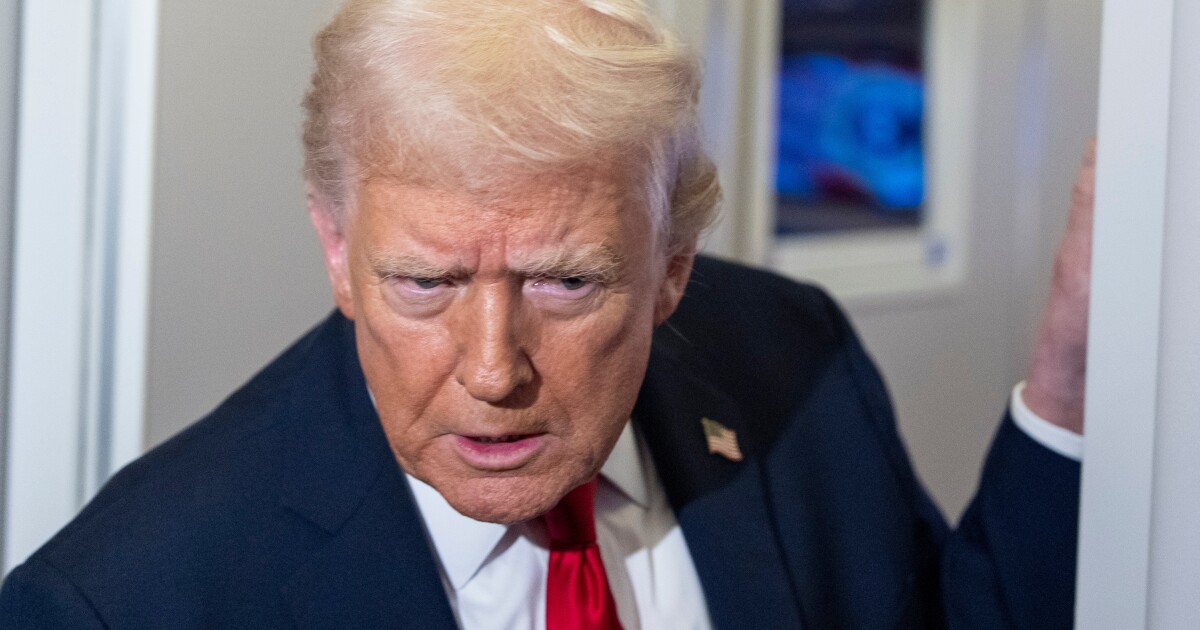
The U.S. Supreme Court is deliberating whether to overturn a pivotal ruling that has historically protected the independence of various federal agencies. The case, which was argued on October 30, 2023, could drastically alter the relationship between the presidency and these agencies. Chief Justice John Roberts leads the court’s conservative majority in this significant examination of executive power.
The justices are considering the implications of the 1935 decision in Humphrey’s Executor, which restricted a president’s ability to remove the heads of independent agencies without cause. According to liberal Justice Elena Kagan, the conservative justices appear eager to revisit this long-standing precedent. This move follows a trend during Roberts’ tenure where the court has increasingly expanded presidential authority.
One of the key figures in the current case is Rebecca Slaughter, a commissioner at the Federal Trade Commission (FTC), whose potential dismissal is central to the arguments being presented. In recent years, the court has allowed significant removals from various independent agencies, including the Consumer Financial Protection Bureau (CFPB) and the National Labor Relations Board. Notably, only two officials have successfully deflected these removal efforts, highlighting a shift in the balance of power.
The implications of overturning Humphrey’s Executor could be extensive. The decision originally established that agency heads could not be dismissed at will by the president, thus fostering an environment where independent agencies could operate without direct political pressure. This framework has been viewed as essential for maintaining checks and balances within the federal government.
Proponents of the unitary executive theory, which argues for a broad interpretation of presidential power, are pushing to dismantle Humphrey’s Executor. Legal figures like D. John Sauer, the Solicitor General, assert that the precedent is fundamentally flawed. Sauer argues that the president should have the authority to remove agency leaders to effectively implement his agenda.
Conversely, legal historians and scholars have raised concerns about this interpretation. Caleb Nelson, a law professor at the University of Virginia, contends that the history and text of Article II of the Constitution support limitations on presidential power. He suggests the current court may not fully grasp the historical context surrounding the removal power.
Another critical aspect of the debate revolves around whether courts can reinstate officials who have been wrongfully dismissed. Justice Neil Gorsuch has indicated that while courts may award back pay to dismissed employees, reinstatement could be problematic. This uncertainty could have significant implications for officials like Lisa Cook, a Federal Reserve governor, who has faced calls for removal.
The Supreme Court’s decision in this case could reshape the dynamics of executive power in the United States. As the justices weigh their options, the potential consequences for independent federal agencies, as well as for the administration of Donald Trump and future presidents, remain uncertain.
Overall, the outcome of this case not only holds immediate ramifications for the agencies involved but also reflects broader questions about the limits of presidential authority in the American political system. As arguments unfold, the nation watches closely, aware that the court’s ruling could redefine the balance of power in the federal government for years to come.

XRP Listed on Regulated Exchange OSL Hong Kong, Expanding Access

Santa Fe’s Image in Film Sparks Discussion on Authenticity

Walter F. Currie, Pioneer in Aerospace Sales, Dies at 91

Shark Glam Styler Aims to Outshine Dyson Airwrap with Versatility

New Mexico Legislature Welcomes Women in Politics: A Historic Shift

G.K. Chesterton’s Vision of the Everlasting Man Resurfaces

Texas Tech Claims First Big 12 Championship with Dominant Win

Hawaiian Airlines Restructures Fleet Ahead of 2025 Merger Changes

Reacher Season 4: A Golden Opportunity for Character Returns

Libraries Challenge Rising E-Book Costs Amid Growing Demand

Tyreek Hill Responds to Tua Tagovailoa’s Comments on Team Dynamics

Liverpool Secures Agreement to Sign Young Striker Will Wright

Save Your Split Tomatoes: Expert Tips for Gardeners

Princess Beatrice’s Daughter Athena Joins Siblings at London Parade

San Francisco Hosts Unique Contest to Identify “Performative Males”

Winter Storms Lash New South Wales with Snow, Flood Risks

Trump Administration Moves to Repeal Key Climate Regulation

SoFi Technologies Shares Slip 2% Following Insider Stock Sale
-
 Lifestyle5 months ago
Libraries Challenge Rising E-Book Costs Amid Growing Demand
-
 Sports4 months ago
Tyreek Hill Responds to Tua Tagovailoa’s Comments on Team Dynamics
-
 Sports4 months ago
Liverpool Secures Agreement to Sign Young Striker Will Wright
-
 Lifestyle4 months ago
Save Your Split Tomatoes: Expert Tips for Gardeners
-
 Lifestyle4 months ago
Princess Beatrice’s Daughter Athena Joins Siblings at London Parade
-
 Science4 months ago
San Francisco Hosts Unique Contest to Identify “Performative Males”
-
 World4 months ago
Winter Storms Lash New South Wales with Snow, Flood Risks
-
 Science5 months ago
Trump Administration Moves to Repeal Key Climate Regulation
-
 Business5 months ago
SoFi Technologies Shares Slip 2% Following Insider Stock Sale
-

 Science5 months ago
New Tool Reveals Link Between Horse Coat Condition and Parasites
-

 Sports4 months ago
Elon Musk Sculpture Travels From Utah to Yosemite National Park
-

 Science5 months ago
New Study Confirms Humans Transported Stonehenge Bluestones