
Politics
Raven Helmet Returns to Kiks.ádi After More Than a Century

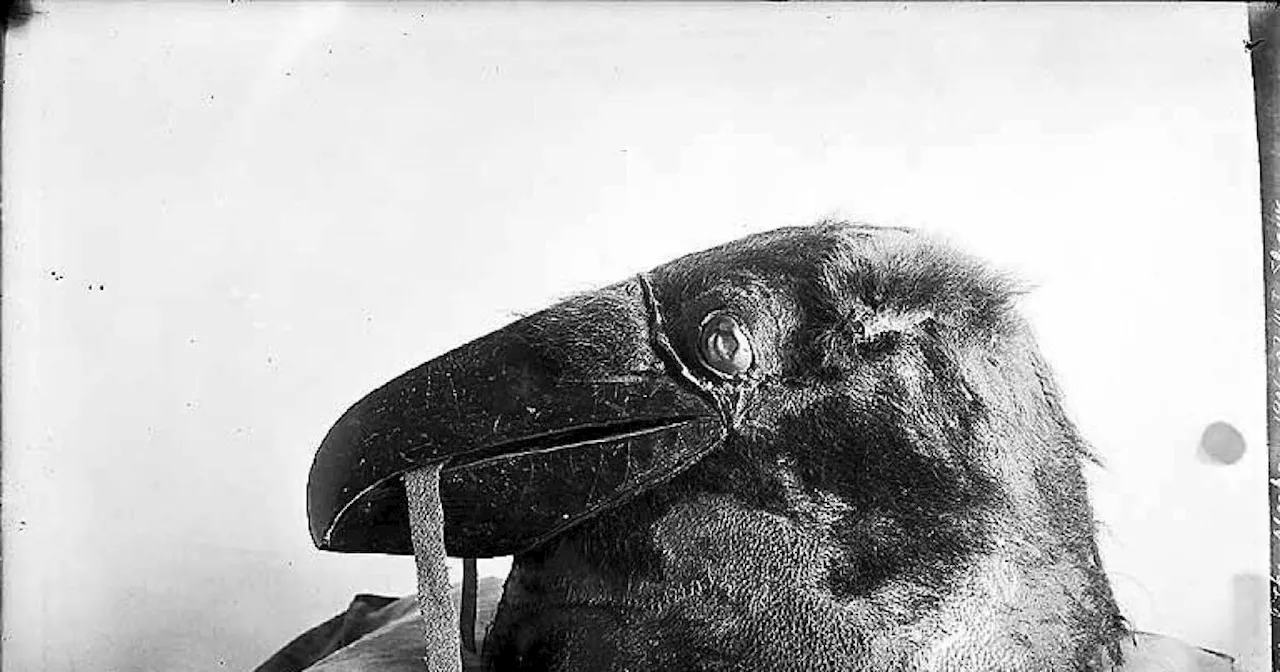
The historic Raven helmet, a significant artifact linked to the Kiks.ádi people, will be returned to them after over a century in the possession of the Sheldon Jackson Museum in Sitka, Alaska. This move comes as part of a broader initiative recognizing the cultural rights of Indigenous peoples and rectifying historical injustices.
For decades, the Kiks.ádi have sought the return of the helmet, asserting that it was never legitimately owned by the state. The artifact has profound cultural significance, representing resistance against colonial forces during the battles fought over 200 years ago by the Lingít and other Alaska Native peoples. The Kiks.ádi warrior Ḵ’alyáan famously wore the helmet during these confrontations, which are emblematic of the struggle against Russian colonization in the region.
The helmet was removed from the Kiks.ádi in the early 1900s. Since 1906, it has been displayed in a museum, encased behind glass. Aanyaanáxch Ray Wilson, the Kiks.ádi clan leader, emphasized the importance of the helmet, stating that it is considered at.oow— a sacred item embodying the spirits of clan members. He expressed the emotional toll of having such a vital piece of heritage inaccessible to the clan: “When we don’t have our items, we can’t use them… It’s really hard to accept.”
Wilson, now 92, reflected on the impact of colonialism, which has left the Lingít with fragmented pieces of their cultural history. He believes that returning sacred items like the Raven helmet is essential for revitalizing their traditions and strengthening their community. “These are really trying times… We need the culture to come back to make our people stronger again,” he said.
The helmet’s journey to the Sheldon Jackson Museum began when three Kiks.ádi men, including a descendant of Ḵ’alyáan, presented it to Alaska’s Territorial Governor, John Brady. Brady co-founded what is now known as Sheldon Jackson College, where the museum is located. The state acquired the museum and its collections in the 1980s. However, Kiks.ádi leaders maintained that sacred clan items should not be transferred without the clan’s consent, asserting that the helmet was misappropriated.
Last month, the Alaska State Museums initiated the process to return the helmet to the Kiks.ádi. A spokesperson for the museums stated that they are collaborating with the Sitka Tribe of Alaska to foster positive relationships and to facilitate the repatriation process. This step represents a significant change in how cultural artifacts are treated and acknowledged.
Clan member Lduteen Jerrick Hope-Lang has been a prominent advocate for the helmet’s return, following in the footsteps of his grandmother, who attempted to reclaim it two decades ago. He noted the importance of documenting the helmet’s history, emphasizing that proof of rightful ownership is crucial. “If you’re asserting you have the right to anything, there must be proof,” he stated.
Hope-Lang collaborated with Jermaine Ross-Allam, director of the Presbyterian Church’s Center for Repair of Historical Harms, who assisted in uncovering archival records that revealed the circumstances surrounding the helmet’s transfer to the church. According to Ross-Allam, the transfer lacked proper authorization, indicating that the church had no rightful claim to the helmet when it sold it to the state. He expressed hope that acknowledging past wrongs could encourage further acts of reconciliation.
Reflecting on previous attempts to reclaim the helmet, Hope-Lang described the painful experience of encountering dismissive attitudes towards his grandmother’s requests. “The way that she was spoken to… as though she had no qualifications as a Kiks.ádi Lingít woman whose ancestors wore that piece, that’s still painful to read,” he said.
Looking forward, Hope-Lang is optimistic about the future, envisioning a time when the helmet will permanently reside with the Kiks.ádi. He emphasized that recognizing clan ownership transforms the narrative surrounding such artifacts. “When you go in and you look at this piece, you’re not saying it belongs to somebody else, it belongs to you,” he noted.
Yeidikook’áa Brady-Howard, chairwoman of the Sitka Tribe of Alaska, acknowledged that the return of the Raven helmet is part of a larger movement to reclaim sacred items dispersed across the country. “Those items are literally our ancestors living away from their homeland,” she stated. Brady-Howard commented on the evolving relationships between Indigenous communities and institutions, recognizing the need for healing and truth-telling in the context of colonial history.
While the Alaska State Museums have begun the repatriation process, several steps remain before the return is finalized. The museum must submit a notice to the Federal Registrar indicating its intent to repatriate the helmet, followed by the removal of the artifact from its collection. The commitment to restoring this significant cultural item marks a pivotal moment in the ongoing efforts to address historical injustices faced by Indigenous peoples in Alaska.

Gregg Carr Inducted into College Football Hall of Fame Class of 2025

Judge Rules Against Fort Bend County Judge KP George in Legal Battle

Doctors Warn of Stroke Risks Linked to Energy Drink Overconsumption

Tyronn Lue Addresses Chris Paul Departure Amid Clippers Struggles

U.S. Navy Activates First Information Warfare Squadron

Semi Tractor-Trailer Fire on U.S. Highway 52 Near Pine Island

Blake Lively Dazzles in Crystal Louboutins and Couture in NYC

Raven Helmet Returns to Kiks.ádi After More Than a Century

AI Breakthrough Enhances Music Therapy for Mental Health Support

Libraries Challenge Rising E-Book Costs Amid Growing Demand

Tyreek Hill Responds to Tua Tagovailoa’s Comments on Team Dynamics

Liverpool Secures Agreement to Sign Young Striker Will Wright

Save Your Split Tomatoes: Expert Tips for Gardeners

Princess Beatrice’s Daughter Athena Joins Siblings at London Parade

San Francisco Hosts Unique Contest to Identify “Performative Males”

Winter Storms Lash New South Wales with Snow, Flood Risks

Trump Administration Moves to Repeal Key Climate Regulation

SoFi Technologies Shares Slip 2% Following Insider Stock Sale
-
 Lifestyle5 months ago
Libraries Challenge Rising E-Book Costs Amid Growing Demand
-
 Sports4 months ago
Tyreek Hill Responds to Tua Tagovailoa’s Comments on Team Dynamics
-
 Sports4 months ago
Liverpool Secures Agreement to Sign Young Striker Will Wright
-
 Lifestyle4 months ago
Save Your Split Tomatoes: Expert Tips for Gardeners
-
 Lifestyle4 months ago
Princess Beatrice’s Daughter Athena Joins Siblings at London Parade
-
 Science4 months ago
San Francisco Hosts Unique Contest to Identify “Performative Males”
-
 World4 months ago
Winter Storms Lash New South Wales with Snow, Flood Risks
-
 Science5 months ago
Trump Administration Moves to Repeal Key Climate Regulation
-
 Business5 months ago
SoFi Technologies Shares Slip 2% Following Insider Stock Sale
-

 Science5 months ago
New Tool Reveals Link Between Horse Coat Condition and Parasites
-

 Sports5 months ago
Elon Musk Sculpture Travels From Utah to Yosemite National Park
-

 Science5 months ago
New Study Confirms Humans Transported Stonehenge Bluestones