
Politics
New Mexico Legislature Welcomes Women in Politics: A Historic Shift

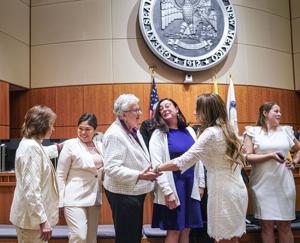
The New Mexico Legislature has undergone a significant transformation, becoming notably more inclusive for women. Currently, women hold 55% of legislative seats, far exceeding the national average and positioning New Mexico second only to Nevada in female representation. This change marks a stark contrast to the past, where the walls of the state Capitol in Santa Fe displayed primarily male lawmakers, beginning with the election of Bertha Paxton in 1923.
State Senator Reena Szczepanski, a Santa Fe Democrat and House majority leader, reflects on this progress, noting the challenges Paxton faced as the only woman in the House nearly a century ago. Today, the Roundhouse is evolving away from its previous reputation as a “boys club.” Szczepanski remarked, “I think the Roundhouse today is a place where — no matter where you come from, no matter who you are — it is about the ideas.”
In 2024, nearly one in ten legislators in New Mexico were mothers of children under 18, according to the Vote Mama Foundation. This demographic shift has introduced unique perspectives and challenges, especially regarding child care needs. As more women enter the legislative arena, they bring their experiences as caregivers, influencing policy discussions in ways that resonate with families across the state.
Several recent elections saw female candidates unseat long-standing incumbents, further contributing to a more balanced representation. For instance, new legislators such as Rep. Yanira Gurrola from Albuquerque expressed feeling supported and embraced by her colleagues, contrasting with past experiences in other workplaces. “I don’t feel alone in doing all this,” she said, highlighting the camaraderie that has developed among female lawmakers.
Despite these advancements, challenges remain. Historically, the Roundhouse has not always been welcoming to women. Szczepanski recalls a time when there were fewer female advocates and lobbyists present in the Capitol. According to the Center for American Women and Politics, only about one-third of state lawmakers nationwide are women, a figure that has been gradually increasing since the 1980s but still lacks gender parity.
Governance in New Mexico is increasingly shaped by women’s voices. Governor Michelle Lujan Grisham noted that the rise of women in political power has led to greater attention on issues affecting families, such as education and child care. She asserted, “The strength and economic power of a family has everything to do with the mom, the woman.”
Legislative reforms have also been implemented to address concerns about harassment. In 2018, the Legislature revised its sexual harassment policy, introducing external oversight for investigations. Further changes in 2023 aimed to facilitate the reporting of harassment complaints, following allegations against former state Senator Daniel Ivey-Soto. His case prompted discussions about the culture of silence surrounding such issues, with advocates like Marianna Anaya pushing for greater transparency and safety for women in politics.
Anaya, who publicly accused Ivey-Soto of groping her, emphasized the importance of breaking down barriers that prevent women from speaking out. “Things will always need improving, but I think the change has been drastic, given so many women in office,” she stated.
Yet, the threat of political violence looms large, as evidenced by a recent rise in targeted attacks against lawmakers. In 2022, shootings occurred at the homes of several Democratic officials, including state Senator Linda Lopez, whose daughter was endangered during one incident. Solomon Peña, the individual responsible for these attacks, was sentenced to 80 years in prison following his conviction on multiple charges.
As lawmakers navigate the complexities of their roles, many are also advocating for structural changes to support working parents. Representative Elaine Sena Cortez highlighted the need for child care resources within the Roundhouse, noting that while her family supports her legislative duties, the costs can be prohibitive. “If we want to have legislators that actually represent the people, you’re going to have legislators who have families,” she emphasized.
Overall, the evolution of the New Mexico Legislature reflects a broader trend towards inclusivity and representation. With women now playing a pivotal role in shaping policies, the future of governance in the state looks increasingly diverse and representative of its constituents. As Szczepanski aptly put it, “If you have good ideas, if you can champion them with excellence, you are going to be heard.”

Tech Blogger Unveils Fleet of Flying Sword Drones in Chengdu

Texas Democrats Navigate Turbulent Political Landscape Post-Ruling

New Study on Moonquakes Raises Concerns for NASA’s Lunar Plans

UFC 323 Highlights: Wrestling Observer Radio Recaps Key Events

Soldiers Claim Control in Benin Ahead of Presidential Election

Microsoft Responds to Feedback, Makes Windows 11 AI Actions Optional

Roivant Sciences Hits 52-Week High; Analysts Adjust Ratings

Robert Eggers’ ‘The Northman’ Thrives on Netflix After Theatrical Struggles

Ensight Skills Center Empowers Coloradans with Vision Loss

Libraries Challenge Rising E-Book Costs Amid Growing Demand

Tyreek Hill Responds to Tua Tagovailoa’s Comments on Team Dynamics

Liverpool Secures Agreement to Sign Young Striker Will Wright

Save Your Split Tomatoes: Expert Tips for Gardeners

Princess Beatrice’s Daughter Athena Joins Siblings at London Parade

San Francisco Hosts Unique Contest to Identify “Performative Males”

Winter Storms Lash New South Wales with Snow, Flood Risks

Trump Administration Moves to Repeal Key Climate Regulation

SoFi Technologies Shares Slip 2% Following Insider Stock Sale
-
 Lifestyle5 months ago
Libraries Challenge Rising E-Book Costs Amid Growing Demand
-
 Sports4 months ago
Tyreek Hill Responds to Tua Tagovailoa’s Comments on Team Dynamics
-
 Sports4 months ago
Liverpool Secures Agreement to Sign Young Striker Will Wright
-
 Lifestyle4 months ago
Save Your Split Tomatoes: Expert Tips for Gardeners
-
 Lifestyle4 months ago
Princess Beatrice’s Daughter Athena Joins Siblings at London Parade
-
 Science4 months ago
San Francisco Hosts Unique Contest to Identify “Performative Males”
-
 World4 months ago
Winter Storms Lash New South Wales with Snow, Flood Risks
-
 Science5 months ago
Trump Administration Moves to Repeal Key Climate Regulation
-
 Business5 months ago
SoFi Technologies Shares Slip 2% Following Insider Stock Sale
-

 Science5 months ago
New Tool Reveals Link Between Horse Coat Condition and Parasites
-

 Sports4 months ago
Elon Musk Sculpture Travels From Utah to Yosemite National Park
-

 Science5 months ago
New Study Confirms Humans Transported Stonehenge Bluestones