
Health
NIH Cuts Funding for Young Scientists, Leaving Many in Limbo

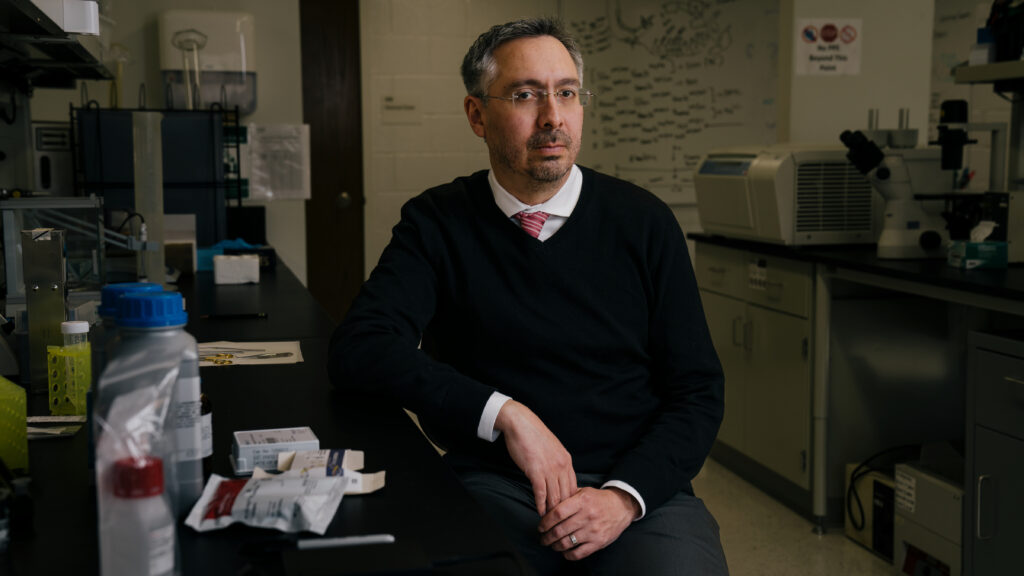
The National Institutes of Health (NIH) has terminated funding for the MOSAIC program, a critical initiative designed to support young scientists transitioning from postdoctoral positions to independent researchers. This decision affects hundreds of early-career researchers who were counting on these funds to establish their own laboratories and contribute to vital scientific advancements.
The MOSAIC program, short for Maximizing Opportunities for Scientific and Academic Independent Careers, was launched to address two major issues: the lack of diversity among NIH-funded researchers and the challenging career prospects for postdoctoral scientists. The program aimed to provide substantial financial support, offering up to $125,000 per year for two years of postdoctoral research, followed by up to $249,000 annually for three additional years as tenure-track faculty.
NIH Director Jay Bhattacharya emphasized the importance of training future biomedical scientists during his tenure, highlighting the need to support researchers during this pivotal phase of their careers. Yet, under the current administration, the program faced significant backlash due to its perceived alignment with diversity, equity, and inclusion (DEI) initiatives. Consequently, the MOSAIC program was deemed incompatible with President Trump’s executive order aimed at dismantling such programs, leading to its abrupt cessation.
Many affected researchers, including molecular biologist Luis Rodriguez, expressed feelings of betrayal. Rodriguez had anticipated using his $160,000 MOSAIC grant to propel his research on lung disease, only to find himself scrambling for alternatives following the program’s termination. “I think everyone has their own horror story,” he remarked, underscoring the emotional toll these funding cuts have taken on early-career scientists.
According to independent project Grant Witness, 104 researchers had their MOSAIC funding cut, although some may see their grants restored following recent court rulings. A detailed analysis by STAT revealed a significant decline in early-career funding overall, with the NIH awarding 172 fewer transition grants to postdoctoral researchers in the nine months leading up to the government shutdown, marking a 10% decrease from the previous year.
The repercussions of these funding cuts extend beyond individual researchers. Experts warn that the diminishing support for early-career scientists could jeopardize the future of the scientific workforce in the United States. Tara Schwetz, a former NIH deputy director, expressed concern about the impact on aspiring scientists, stating, “The interest is shifting in the wrong direction, and I don’t think that’s good for the country.”
The MOSAIC program was initially created to foster a more diverse scientific community by extending opportunities to individuals from a variety of disadvantaged backgrounds, including those who grew up in rural areas or came from families with low educational attainment. Michael Sesma, who played a key role in establishing the program, emphasized its intention to provide support where it was most needed.
Despite the program’s early successes in improving representation among NIH grant recipients, the current administration’s approach has resulted in widespread disillusionment. Critics argue that the elimination of such programs without proper analysis undermines the progress made toward increasing diversity in scientific research.
The cancellation of MOSAIC grants has left many researchers, including Sarah Vick, feeling the impact of a diminished funding landscape. Vick, who studies immune responses to infections, was in the postdoctoral phase of her MOSAIC award when the funding abruptly ceased. “Not having NIH funding makes me a less appealing job candidate,” she noted, as the competitive job market for faculty positions becomes increasingly challenging.
The NIH’s position on the program’s termination reflects a broader shift in funding priorities, with a focus on what Bhattacharya describes as “gold-standard science” rather than political ideologies. While the NIH maintains that it continues to support early-career researchers through other initiatives, the recent funding cuts raise questions about the agency’s commitment to fostering an inclusive scientific community.
As early-career scientists like Rodriguez and Vick adjust to their new realities, they face uncertainty about their futures in academia. Rodriguez, who has had to scale back his original hiring plans and research ambitions, remarked, “The potential for failure is far more realistic than it’s ever been.” The emotional and professional toll of these funding cuts may have lasting implications for the next generation of scientists in the United States.

Cary Street Partners Boosts Stake in SLB Limited to $3.66 Million

John Cena Celebrates Bayley’s Successful Training Camp in Florida

NIH Cuts Funding for Young Scientists, Leaving Many in Limbo

Discover 41 Unique Holiday Gifts for the 2025 Season

Navigating Social Invitations: Miss Manners Offers Timely Advice

NIH Cuts MOSAIC Program Impact Hundreds of Early-Career Scientists

Lando Norris Secures First Formula 1 Title at Abu Dhabi Grand Prix

German Industrial Production Surges Ahead of Major Investments

Stephanie Ruhle Challenges Viewer Perceptions of Legacy Media

Libraries Challenge Rising E-Book Costs Amid Growing Demand

Tyreek Hill Responds to Tua Tagovailoa’s Comments on Team Dynamics

Liverpool Secures Agreement to Sign Young Striker Will Wright

Save Your Split Tomatoes: Expert Tips for Gardeners

Princess Beatrice’s Daughter Athena Joins Siblings at London Parade

San Francisco Hosts Unique Contest to Identify “Performative Males”

Winter Storms Lash New South Wales with Snow, Flood Risks

Trump Administration Moves to Repeal Key Climate Regulation

SoFi Technologies Shares Slip 2% Following Insider Stock Sale
-
 Lifestyle5 months ago
Libraries Challenge Rising E-Book Costs Amid Growing Demand
-
 Sports4 months ago
Tyreek Hill Responds to Tua Tagovailoa’s Comments on Team Dynamics
-
 Sports4 months ago
Liverpool Secures Agreement to Sign Young Striker Will Wright
-
 Lifestyle4 months ago
Save Your Split Tomatoes: Expert Tips for Gardeners
-
 Lifestyle4 months ago
Princess Beatrice’s Daughter Athena Joins Siblings at London Parade
-
 Science4 months ago
San Francisco Hosts Unique Contest to Identify “Performative Males”
-
 World4 months ago
Winter Storms Lash New South Wales with Snow, Flood Risks
-
 Science5 months ago
Trump Administration Moves to Repeal Key Climate Regulation
-
 Business5 months ago
SoFi Technologies Shares Slip 2% Following Insider Stock Sale
-

 Science5 months ago
New Tool Reveals Link Between Horse Coat Condition and Parasites
-

 Sports5 months ago
Elon Musk Sculpture Travels From Utah to Yosemite National Park
-

 Science5 months ago
New Study Confirms Humans Transported Stonehenge Bluestones