
Science
Researchers Uncover Secrets of Armenia’s Ancient Dragon Stones

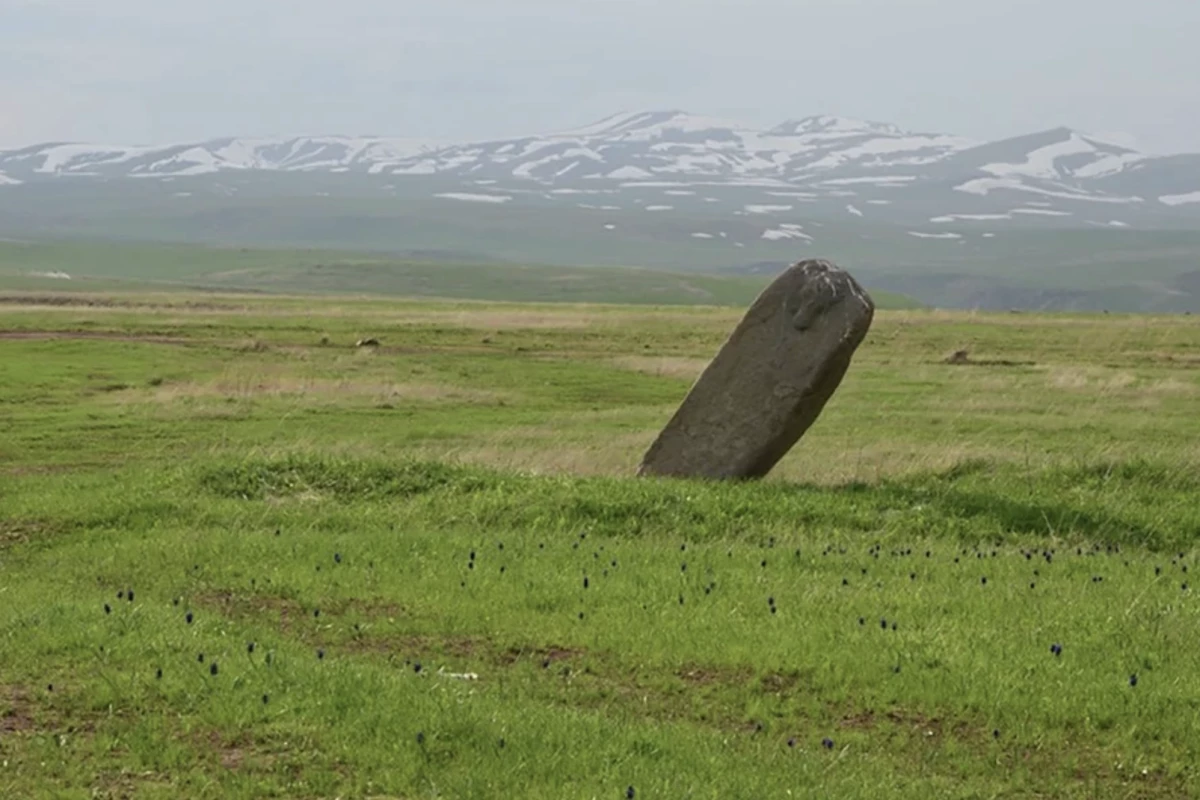
Archaeologists have unveiled the mystery behind Armenia’s ancient “dragon stones,” known as vishaps, which date back approximately 6,000 years. Recent research from Yerevan State University and the Institute of Archaeology and Ethnography provides compelling evidence that these monumental carvings were not merely territorial markers or mythological symbols, but significant components of an early “water cult.” The study highlights how these totems were purposefully positioned near water sources, reflecting the cultural importance of water in ancient Armenian society.
The dragon stones, massive carved monoliths scattered across the rugged volcanic landscape of Armenia, have puzzled researchers since their discovery in the 20th century. Each stone is meticulously carved and polished on all sides except for the tail end, suggesting they were originally erected upright. Some exhibit shapes reminiscent of stretched cattle hides, while others resemble stylized fish. The sheer effort required to transport and shape these stones in such challenging terrains indicates their significance to the ancient builders.
Insights from New Research
The research team conducted a large-scale statistical and spatial analysis of 115 known vishaps, revealing a deliberate distribution pattern across two distinct altitude bands: approximately 1,900 m (6,200 ft) and 2,700 m (8,900 ft). These elevation zones correspond to different phases of the annual herding cycle, indicating a sophisticated understanding of the landscape by early inhabitants. Rather than placing the heaviest stones in accessible areas, the builders transported them high into the mountains, where they were strategically positioned near natural springs and other water sources.
The researchers noted that while many vishaps today lie collapsed or horizontally on the ground, their design and placement imply a more ceremonial purpose. “The majority of vishaps are either collapsed or placed horizontally on the ground. However, all three typological groups of vishaps exhibit carving and polishing on all faces,” the research team observed.
Using methods such as radiocarbon dating, they established that some of these stones date back to between 4200-4000 BCE, during the Chalcolithic period, suggesting a long-standing connection to water-based rituals that predate similar megalithic traditions in Europe, including those at Stonehenge.
Implications for Understanding Prehistoric Culture
The findings indicate that the vishaps were not simply decorative objects but integral to a belief system that revered water as sacred. The correlation between the stones’ placement and water sources highlights a cultural practice that intertwined daily life with spiritual significance. The research suggests that the vishaps served as totems of appreciation, marking vital water flow points and embodying the community’s respect for nature.
The research team emphasized the communal effort involved in constructing these monuments. “The first statistical analysis of their elevation distribution and size reveals that their construction was intentionally labor-intensive rather than arbitrary,” they stated. This coordination of resources and labor likely required strong communal or spiritual leadership, reflecting the social dynamics of prehistoric Armenian communities.
As this study sheds light on the significance of the dragon stones, it enhances our understanding of high-altitude archaeological sites and the societal structures that shaped early human interactions with their environment. The insights into the ancient water cult and the cultural motivations behind the vishaps offer a unique perspective on the complexity of prehistoric life in Armenia.

Designers Predict Top 10 Kitchen Backsplash Trends for 2026

Shineco Faces Tough Competition in the Medical Drugs Sector

Longtime Educator Harold Klonecky Passes Away at 98

Warren Moon Offers Key Insights as Philip Rivers Returns to NFL

Reddit Challenges Australia’s Under-16 Social Media Ban in Court

Philadelphia Gang Hitman Tyvine Jones Arrested for Triple Murder

Patrick Coveney Divests 136,379 Shares of SSP Group Stock

BLACKPINK’s Jennie and Stars Join Exciting New Variety Show

Jessica Alba Stuns in Vacation Video with Chic Beach Look

Libraries Challenge Rising E-Book Costs Amid Growing Demand

Tyreek Hill Responds to Tua Tagovailoa’s Comments on Team Dynamics

Liverpool Secures Agreement to Sign Young Striker Will Wright

Save Your Split Tomatoes: Expert Tips for Gardeners

Princess Beatrice’s Daughter Athena Joins Siblings at London Parade

San Francisco Hosts Unique Contest to Identify “Performative Males”

Winter Storms Lash New South Wales with Snow, Flood Risks

Trump Administration Moves to Repeal Key Climate Regulation

SoFi Technologies Shares Slip 2% Following Insider Stock Sale
-
 Lifestyle5 months ago
Libraries Challenge Rising E-Book Costs Amid Growing Demand
-
 Sports4 months ago
Tyreek Hill Responds to Tua Tagovailoa’s Comments on Team Dynamics
-
 Sports5 months ago
Liverpool Secures Agreement to Sign Young Striker Will Wright
-
 Lifestyle5 months ago
Save Your Split Tomatoes: Expert Tips for Gardeners
-
 Lifestyle5 months ago
Princess Beatrice’s Daughter Athena Joins Siblings at London Parade
-
 Science4 months ago
San Francisco Hosts Unique Contest to Identify “Performative Males”
-
 World4 months ago
Winter Storms Lash New South Wales with Snow, Flood Risks
-
 Science5 months ago
Trump Administration Moves to Repeal Key Climate Regulation
-
 Business5 months ago
SoFi Technologies Shares Slip 2% Following Insider Stock Sale
-

 Science5 months ago
New Tool Reveals Link Between Horse Coat Condition and Parasites
-

 Sports5 months ago
Elon Musk Sculpture Travels From Utah to Yosemite National Park
-
 Science5 months ago
New Study Confirms Humans Transported Stonehenge Bluestones