
Health
U.S. Research Landscape Shaken as Funding Cuts Reshape Science

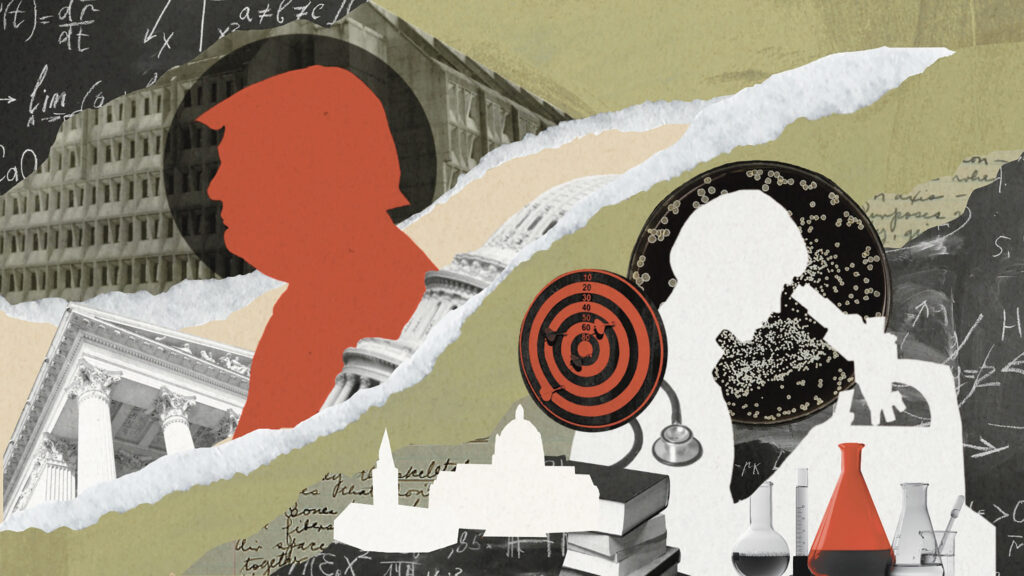
In a significant shift for U.S. research funding, the administration of former President Donald Trump has dramatically altered the landscape of support for scientific endeavors. As researchers look ahead to 2025, many face a bleak outlook for their careers, with funding cuts resulting in a loss of opportunities and resources. Over the past ten months, the foundational agreement between the federal government and academic institutions has been severely tested, revealing vulnerabilities in a system that had previously driven American innovation.
While the National Institutes of Health (NIH) managed to utilize its entire budget for the fiscal year, court interventions restored billions in grant funding. Nonetheless, the number of awarded grants has seen a notable drop. According to a STAT analysis of nearly 750,000 grants from the NIH RePORTER database, the number of awards from January through September 2025 declined by 11.6% compared to the previous year, and 8.2% from the average of the last nine years. This reduction affects a wide array of research projects, including critical studies on cancer, Alzheimer’s disease, and HIV/AIDS.
The NIH’s $37 billion extramural portfolio has undergone significant changes, primarily due to a new funding structure that pays many multiyear grants up front, thereby limiting the number of projects that can be funded. This shift has particularly impacted areas that are typically bipartisan, such as vaccine research and health disparities. The repercussions extend to high-risk, high-reward grants which encourage innovative scientific ideas. In 2024, the NIH funded 406 such grants; in 2025, that number fell to 364.
In academic institutions not directly targeted by the administration’s policies, the uncertainty surrounding funding has led to defensive measures. Many universities have instituted hiring freezes, layoffs, and reductions in graduate training programs. Enrollment in Ph.D. programs in life and biomedical sciences stagnated in the fall of 2025, according to early data from the National Student Clearinghouse Research Center. Additionally, early-career grant awards, crucial for graduate students and postdoctoral researchers, dropped to their lowest level since 2016.
Many scientists express concern that the longstanding partnership between the government and the research community is being eroded. One NIH official noted, “That’s the most devastating part of all this. Why would anyone trust the NIH ever again?” This sentiment is echoed by Shirley Tilghman, a molecular biologist and former president of Princeton University, who argues that the administration’s focus on punishing elite institutions has unintentionally jeopardized the scientific capacity of the nation.
Despite the challenges, some officials within the administration view this tumultuous period as an opportunity for reform. They argue that the current situation could usher in changes long sought after within federal science agencies. In conversations with over two dozen biomedical researchers, historians, and former health officials, many expressed a mix of concern and cautious optimism. They agree that the current landscape is irrevocably altered.
Larry Tabak, who served as the NIH’s principal deputy director until early 2023, commented, “Whatever comes next is never going to be what it used to be. The genie is out of the bottle.” This collective acknowledgment of a new reality underscores the need for a reimagined approach to research funding and collaboration between the government and academia, even as the future remains uncertain.
As the scientific community grapples with these changes, the implications of the funding cuts will continue to be felt across various disciplines, potentially reshaping the direction of research in the United States for years to come.

DraftKings Launches Exciting $300 Bonus for Missouri Sports Bettors

Dark Humor and Thrills Unfold in ‘Caught Stealing’ Adaptation

Long Butterfly Cut with Bangs Takes the Hair Trend Spotlight

László Krasznahorkai Engages Audience with Rare Lecture in Stockholm

Cassidy Aims for Bipartisan Support with New Health Care Plan

Deep-Sea Mining Study Reveals 37% Drop in Marine Biodiversity

Police Rescue Abandoned Dog Found Tied in Suitcase in Everett

DNA Mechanisms Enable Tuberculosis to Resist Treatment

Market Optimism Rises as 2026 Approaches Amid Fed Changes

Libraries Challenge Rising E-Book Costs Amid Growing Demand

Tyreek Hill Responds to Tua Tagovailoa’s Comments on Team Dynamics

Liverpool Secures Agreement to Sign Young Striker Will Wright

Save Your Split Tomatoes: Expert Tips for Gardeners

Princess Beatrice’s Daughter Athena Joins Siblings at London Parade

San Francisco Hosts Unique Contest to Identify “Performative Males”

Winter Storms Lash New South Wales with Snow, Flood Risks

Trump Administration Moves to Repeal Key Climate Regulation

SoFi Technologies Shares Slip 2% Following Insider Stock Sale
-
 Lifestyle5 months ago
Libraries Challenge Rising E-Book Costs Amid Growing Demand
-
 Sports4 months ago
Tyreek Hill Responds to Tua Tagovailoa’s Comments on Team Dynamics
-
 Sports4 months ago
Liverpool Secures Agreement to Sign Young Striker Will Wright
-
 Lifestyle4 months ago
Save Your Split Tomatoes: Expert Tips for Gardeners
-
 Lifestyle4 months ago
Princess Beatrice’s Daughter Athena Joins Siblings at London Parade
-
 Science4 months ago
San Francisco Hosts Unique Contest to Identify “Performative Males”
-
 World4 months ago
Winter Storms Lash New South Wales with Snow, Flood Risks
-
 Science5 months ago
Trump Administration Moves to Repeal Key Climate Regulation
-
 Business5 months ago
SoFi Technologies Shares Slip 2% Following Insider Stock Sale
-

 Science5 months ago
New Tool Reveals Link Between Horse Coat Condition and Parasites
-

 Sports4 months ago
Elon Musk Sculpture Travels From Utah to Yosemite National Park
-

 Science5 months ago
New Study Confirms Humans Transported Stonehenge Bluestones