
Science
Researchers Unveil ‘OCTOID’: A Color-Changing Soft Robot

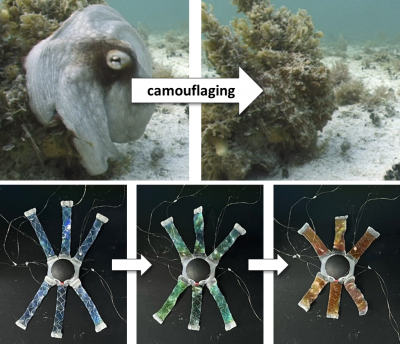
A team of researchers at the Korea Institute of Science and Technology (KIST) has introduced a groundbreaking soft robot named ‘OCTOID’. Led by Dr. Dae-Yoon Kim, this innovative robot mimics the camouflage and movement capabilities of octopuses, showcasing the potential for advanced robotics in various applications.
OCTOID represents a significant leap in robotics, as it not only bends and stretches but also changes color in response to electrical stimulation. This feature allows the robot to adapt its appearance to blend with its surroundings, enhancing its functionality in diverse environments. The ability to grasp objects further expands the potential uses of this technology.
Key Features and Implications of OCTOID
The development of OCTOID could have far-reaching implications for various fields, including medicine, manufacturing, and environmental monitoring. The soft robot’s design is inspired by the natural abilities of octopuses, which are known for their remarkable adaptability and intelligence. This inspiration has led to a creation that integrates both movement and color change, setting it apart from traditional robotic designs.
In practical terms, OCTOID’s color-changing feature enables it to camouflage effectively, which could be useful in applications such as search and rescue operations or in environments where stealth is preferred. Additionally, its ability to grasp objects opens up possibilities for delicate handling tasks in fields like surgery or assembly line manufacturing.
The research, conducted at the Functional Composite Materials Research Center at KIST, highlights the growing intersection of biology and technology. As robots like OCTOID become more sophisticated, they could lead to new approaches in robotics that prioritize flexibility and responsiveness over rigid structures.
Future Directions and Research Opportunities
Looking ahead, the team at KIST aims to further enhance OCTOID’s capabilities. Future iterations may include improved sensors and control systems that allow for even greater responsiveness to environmental changes. Researchers also envision potential collaborations with industries that could benefit from this technology, paving the way for innovative solutions across various sectors.
The development of OCTOID not only exemplifies advancements in robotics but also emphasizes the importance of interdisciplinary research. By drawing inspiration from nature, scientists and engineers can create technologies that not only perform tasks more efficiently but also adapt to the complexities of real-world environments.
As the field of soft robotics continues to evolve, the work of Dr. Dae-Yoon Kim and his team at KIST serves as a promising indication of the future of robotic technology, where adaptability and versatility could redefine how we interact with machines.

New Jersey Risks Economic Growth by Neglecting Veteran Entrepreneurs

Fans Demand Canon for Top 20 Unofficial TV Couples

Study Reveals Promising Outcomes for Mismatched Blood Transplants

WJXT Secures Four Suncoast Emmys for Cultural Excellence

$1.25 Million Grant Fuels Hawaiʻi’s Advanced Hazard Monitoring Initiative

DraftKings Launches Exciting $300 Bonus for Missouri Sports Bettors

Dark Humor and Thrills Unfold in ‘Caught Stealing’ Adaptation

Long Butterfly Cut with Bangs Takes the Hair Trend Spotlight

László Krasznahorkai Engages Audience with Rare Lecture in Stockholm

Libraries Challenge Rising E-Book Costs Amid Growing Demand

Tyreek Hill Responds to Tua Tagovailoa’s Comments on Team Dynamics

Liverpool Secures Agreement to Sign Young Striker Will Wright

Save Your Split Tomatoes: Expert Tips for Gardeners

Princess Beatrice’s Daughter Athena Joins Siblings at London Parade

San Francisco Hosts Unique Contest to Identify “Performative Males”

Winter Storms Lash New South Wales with Snow, Flood Risks

Trump Administration Moves to Repeal Key Climate Regulation

SoFi Technologies Shares Slip 2% Following Insider Stock Sale
-
 Lifestyle5 months ago
Libraries Challenge Rising E-Book Costs Amid Growing Demand
-
 Sports4 months ago
Tyreek Hill Responds to Tua Tagovailoa’s Comments on Team Dynamics
-
 Sports4 months ago
Liverpool Secures Agreement to Sign Young Striker Will Wright
-
 Lifestyle4 months ago
Save Your Split Tomatoes: Expert Tips for Gardeners
-
 Lifestyle4 months ago
Princess Beatrice’s Daughter Athena Joins Siblings at London Parade
-
 Science4 months ago
San Francisco Hosts Unique Contest to Identify “Performative Males”
-
 World4 months ago
Winter Storms Lash New South Wales with Snow, Flood Risks
-
 Science5 months ago
Trump Administration Moves to Repeal Key Climate Regulation
-
 Business5 months ago
SoFi Technologies Shares Slip 2% Following Insider Stock Sale
-

 Science5 months ago
New Tool Reveals Link Between Horse Coat Condition and Parasites
-

 Sports5 months ago
Elon Musk Sculpture Travels From Utah to Yosemite National Park
-

 Science5 months ago
New Study Confirms Humans Transported Stonehenge Bluestones