
World
Ursa Major Advances Liquid Propulsion for Hypersonic Flight

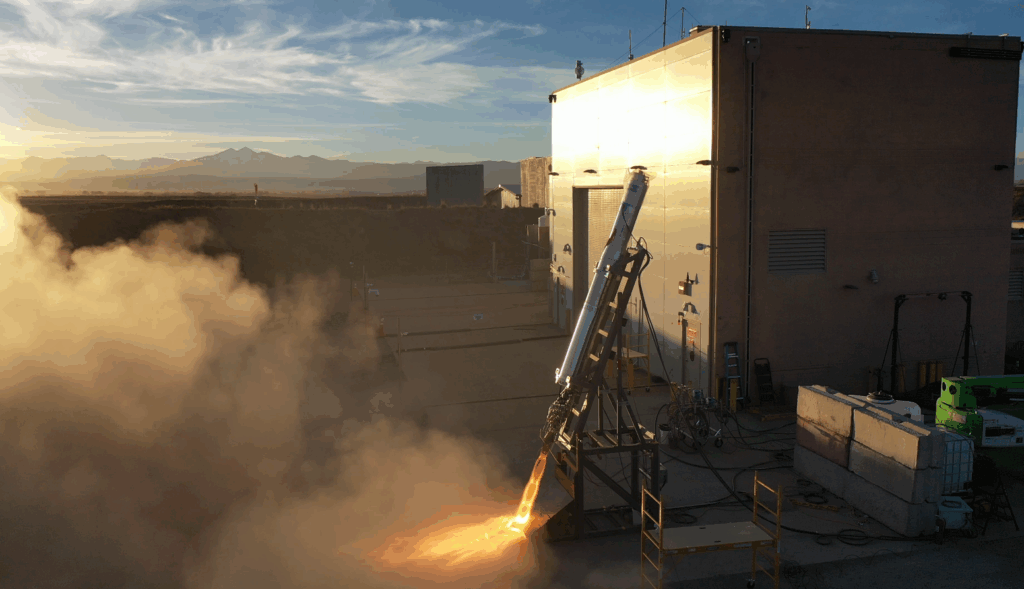
Recent developments in hypersonic propulsion have the potential to change the dynamics of military capabilities. Ursa Major, an American aerospace company, is leading this charge with its innovative storable liquid rocket engine technology. This advancement addresses limitations present in traditional propulsion methods, such as solid-fuel rockets and air-breathing engines, particularly in the context of competing nations like Russia and China.
The Ursa Major technology offers several key advantages. Its storable liquid rocket engines can start, stop, and throttle, providing improved maneuverability and survivability during flight. Unlike cryogenic or toxic fuels, the liquid propellants can be handled more easily and stored for extended periods, even up to ten years. This flexibility makes them suitable for various environments, including both atmospheric and space operations.
Rethinking Hypersonic Propulsion
In an interview with Breaking Defense, Ursa Major CEO Dan Jablonsky emphasized the current state of hypersonic propulsion technology. “At a high level, we’re behind where we should be with peer and near-peer adversaries,” he noted. Existing propulsion systems are often costly, and many U.S. development programs have not yielded the expected results.
Jablonsky outlined the limitations of solid and air-breathing engines. While solid-fuel systems are reliable, they lack the maneuverability of liquid systems and can be expensive to produce at larger scales. Air-breathing engines, such as scramjets and ramjets, have faced delays and altitude restrictions, and none have yet been deployed in operational fleets.
In contrast, Ursa Major’s liquid hypersonic engines, particularly the Hadley engine, have already achieved flights at speeds exceeding Mach 5. This capability is poised to enhance military training and operations by providing reusable targets and advanced threat trajectories for wargames and sensor calibration.
Storable Liquid Engine Technology
The company is working on the Draper system, which is a tactical version of the Hadley engine. This storable liquid engine combines the fuel and oxidizer in the combustion chamber, allowing it to be started and stopped as needed. Jablonsky explained that this flexibility enables greater maneuverability compared to traditional cryogenic systems, which are typically one-start configurations and difficult to handle in military operations.
The Draper engine can be stored in various conditions, including on ships, airbases, or even in space. It offers the reliability of solid-fuel systems while maintaining the versatility of liquid propulsion, making it an attractive option for the U.S. Air Force. Notably, the Pentagon highlighted that the first flight test of the Hadley engine marked the nation’s return to reusable hypersonic flight testing since the end of the X-15 hypersonic research program in 1968.
Jablonsky elaborated on the potential of the Draper system: “With a liquid system like this, you can achieve long distances akin to a Tomahawk-type system, but at speeds that current air-breathing systems cannot match.” This capability is critical as adversaries continue to enhance their hypersonic weaponry.
Ursa Major’s focus on rapid development cycles is also noteworthy. The company utilizes advanced 3D printing techniques to manufacture components, significantly speeding up production and iteration processes. Jablonsky stated, “Our Draper engine is approximately 60% additively manufactured.” This approach allows for quick adjustments and testing, enabling the company to deliver cutting-edge solutions to the military.
In summary, Ursa Major’s advancements in liquid propulsion technology stand to redefine hypersonic flight capabilities. The combination of storable liquid engines, quick development cycles, and enhanced maneuverability positions the U.S. to regain its competitive edge in this critical area of defense technology. As the need for advanced military capabilities grows, innovations like the Draper system will play a pivotal role in shaping future warfare.

Jacksonville Woman Advocates for HealthLink Amid City Scrutiny

Democrats Demand Video Release on Controversial Strike Against Drug Traffickers

Why Traditional A/B Testing Delays Decisions and How to Act

Alex Golesh’s Offensive Strategies Spark Excitement at Auburn

Authorities Monitor Online Sentiment Amid New Orleans Immigration Crackdown

La Mesa Man Arrested After Knife Threats Near Child

New Jersey Risks Economic Growth by Neglecting Veteran Entrepreneurs

Fans Demand Canon for Top 20 Unofficial TV Couples

Study Reveals Promising Outcomes for Mismatched Blood Transplants

Libraries Challenge Rising E-Book Costs Amid Growing Demand

Tyreek Hill Responds to Tua Tagovailoa’s Comments on Team Dynamics

Liverpool Secures Agreement to Sign Young Striker Will Wright

Save Your Split Tomatoes: Expert Tips for Gardeners

Princess Beatrice’s Daughter Athena Joins Siblings at London Parade

San Francisco Hosts Unique Contest to Identify “Performative Males”

Winter Storms Lash New South Wales with Snow, Flood Risks

Trump Administration Moves to Repeal Key Climate Regulation

SoFi Technologies Shares Slip 2% Following Insider Stock Sale
-
 Lifestyle5 months ago
Libraries Challenge Rising E-Book Costs Amid Growing Demand
-
 Sports4 months ago
Tyreek Hill Responds to Tua Tagovailoa’s Comments on Team Dynamics
-
 Sports4 months ago
Liverpool Secures Agreement to Sign Young Striker Will Wright
-
 Lifestyle4 months ago
Save Your Split Tomatoes: Expert Tips for Gardeners
-
 Lifestyle4 months ago
Princess Beatrice’s Daughter Athena Joins Siblings at London Parade
-
 Science4 months ago
San Francisco Hosts Unique Contest to Identify “Performative Males”
-
 World4 months ago
Winter Storms Lash New South Wales with Snow, Flood Risks
-
 Science5 months ago
Trump Administration Moves to Repeal Key Climate Regulation
-
 Business5 months ago
SoFi Technologies Shares Slip 2% Following Insider Stock Sale
-

 Science5 months ago
New Tool Reveals Link Between Horse Coat Condition and Parasites
-

 Sports5 months ago
Elon Musk Sculpture Travels From Utah to Yosemite National Park
-

 Science5 months ago
New Study Confirms Humans Transported Stonehenge Bluestones