
Health
Precision Robotics Revolutionizes Electronics and Medical Manufacturing

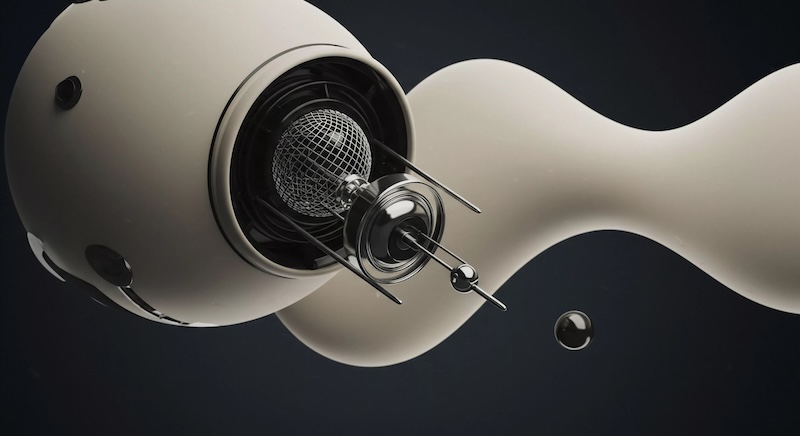
Precision robotics has advanced significantly in recent decades, transitioning from the ability to place heavy parts with centimeter-level accuracy to achieving remarkable precision with repeatability rates of ±5 μm. This leap in performance is particularly evident in the fields of electronics assembly and medical device manufacturing, where the increasing complexity and miniaturization of components are driving the adoption of advanced robotic technologies.
Modern precision robots are now crucial in industries where humans cannot consistently assemble or inspect components with such stringent tolerances. As devices grow smaller and more intricate, the demand for precision robotics is surging, offering solutions that meet the exacting standards required in both electronics and healthcare.
Technological Innovations in Precision Robotics
Recent innovations highlight the remarkable capabilities of precision robotics. For instance, Yamaha has updated its YK-XG and YK-TZ SCARA robot ranges, boasting ±5 μm repeatability for applications in micro-assembly, semiconductor handling, and optical device production. Documentation from the company also cites specifications as tight as ±10 μm, which is essential for advanced electronics and photonics manufacturing.
Meanwhile, the Zimmer Group has expanded its offerings with cleanroom-certified grippers designed for delicate medical devices like catheters and drug-delivery components. These tools achieve sub-millimeter placement, crucial for maintaining the integrity of soft materials. Additionally, Fanuc markets its SCARA and SR series systems for high-speed precision in PCB micro-assembly, further emphasizing the role of automation in achieving sub-millimeter accuracy.
Understanding Key Terms in Robotics Performance
To appreciate how robots achieve high precision, it is important to clarify key terms. Accuracy indicates how closely a robot reaches the commanded position. For example, if a robot is instructed to move to X = 100.000 mm but reaches 100.007 mm, the accuracy error is 7 μm. Repeatability, on the other hand, measures how consistently a robot returns to the same position, regardless of absolute accuracy.
Precision is often used to describe both accuracy and repeatability, but in metrology, it specifically refers to the consistency of repeated measurements. In robotics, it serves as a practical term that reflects the overall quality of performance under real conditions. Understanding these distinctions is critical for engineers working in fields that require micrometer-level precision.
Engineers must also consider resolution, which refers to the smallest movement the system can detect. A system can boast high resolution yet still suffer from poor repeatability due to factors like thermal drift. This distinction is vital for ensuring that precision robots perform as intended in demanding environments.
Moreover, tolerances define the acceptable range of variation in a part’s dimensions. For instance, a component specified as 10.00 mm ±0.05 mm can measure anywhere between 9.95 mm and 10.05 mm while still being deemed acceptable.
Applications in Electronics and Medical Device Manufacturing
The electronics sector was an early adopter of precision robotics, automating tasks that require micrometer-level positioning. Critical applications include:
- Aligning chiplets within ±1 to 3 μm before bonding.
- Assisting in wafer-level placement and die attach operations.
- Placing thousands of wire bonds per second with high consistency.
- Aligning lens stacks in smartphone cameras for optical calibration.
- Managing the delicate assembly of flexible PCBs without damaging components.
In this context, SCARA robots often provide the optimal balance of rigidity, speed, and precision. Delta robots excel in speed, while Cartesian systems deliver the highest accuracy, though they may not always be suitable for free-form assembly.
As medical devices increasingly incorporate micro-electronics and microfluidics, the demand for precision robotics parallels that of electronics manufacturing. Modern disposable insulin pumps and neurostimulation devices require assembly tolerances that necessitate automation technologies similar to those found in electronics factories.
Precision robotics are tasked with intricate processes such as threading micro-wires, positioning reinforcement components, and guiding tubing around delicate features. For example, welding Nitinol stents with an accuracy of 10 to 20 μm is now a common application.
Additionally, diagnostics devices often require alignment of channels thinner than a human hair, which can only be achieved through robotic precision. Vision-guided robots are increasingly employed to detect minute imperfections, enabling inspections down to 5 to 10 μm.
Challenges and Future Directions
Manufacturers face several challenges in implementing these technologies. Robots must comply with ISO 5-7 standards to avoid particulate contamination, while also utilizing food-grade or medical-grade lubricants. Achieving micrometer-level precision often necessitates a more deliberate movement, and ultra-stiff grippers are essential for maintaining surface friction control.
Regulatory requirements, such as FDA 21 CFR 820 and ISO 13485, mandate rigorous process validation, placing a premium on repeatability over absolute accuracy. Companies must invest in training automation engineers in robotics, machine vision, metrology, and cleanroom processes.
Looking ahead, precision robotics will play an increasingly pivotal role as electronics and medical device manufacturing continue to converge. The next decade is likely to witness greater integration of AI-driven precision technologies, further enhancing the capabilities of robotic systems.
As the demand for smaller, smarter devices grows, mastering micrometer-class automation will be crucial for companies aiming to define the future of electronics and medical technology. The industries must adapt to maintain competitive advantage, recognizing that precision robotics is not just a tool but the backbone of the next generation of manufacturing.
The rapid evolution in this field opens new avenues for suppliers and investors, highlighting the potential for growth in the sector of miniature, high-value devices.
Image courtesy of Prism Sustainability Directory.

DraftKings Launches Exciting $300 Bonus for Missouri Sports Bettors

Dark Humor and Thrills Unfold in ‘Caught Stealing’ Adaptation

Long Butterfly Cut with Bangs Takes the Hair Trend Spotlight

László Krasznahorkai Engages Audience with Rare Lecture in Stockholm

Cassidy Aims for Bipartisan Support with New Health Care Plan

Deep-Sea Mining Study Reveals 37% Drop in Marine Biodiversity

Police Rescue Abandoned Dog Found Tied in Suitcase in Everett

DNA Mechanisms Enable Tuberculosis to Resist Treatment

Market Optimism Rises as 2026 Approaches Amid Fed Changes

Libraries Challenge Rising E-Book Costs Amid Growing Demand

Tyreek Hill Responds to Tua Tagovailoa’s Comments on Team Dynamics

Liverpool Secures Agreement to Sign Young Striker Will Wright

Save Your Split Tomatoes: Expert Tips for Gardeners

Princess Beatrice’s Daughter Athena Joins Siblings at London Parade

San Francisco Hosts Unique Contest to Identify “Performative Males”

Winter Storms Lash New South Wales with Snow, Flood Risks

Trump Administration Moves to Repeal Key Climate Regulation

SoFi Technologies Shares Slip 2% Following Insider Stock Sale
-
 Lifestyle5 months ago
Libraries Challenge Rising E-Book Costs Amid Growing Demand
-
 Sports4 months ago
Tyreek Hill Responds to Tua Tagovailoa’s Comments on Team Dynamics
-
 Sports4 months ago
Liverpool Secures Agreement to Sign Young Striker Will Wright
-
 Lifestyle4 months ago
Save Your Split Tomatoes: Expert Tips for Gardeners
-
 Lifestyle4 months ago
Princess Beatrice’s Daughter Athena Joins Siblings at London Parade
-
 Science4 months ago
San Francisco Hosts Unique Contest to Identify “Performative Males”
-
 World4 months ago
Winter Storms Lash New South Wales with Snow, Flood Risks
-
 Science5 months ago
Trump Administration Moves to Repeal Key Climate Regulation
-
 Business5 months ago
SoFi Technologies Shares Slip 2% Following Insider Stock Sale
-

 Science5 months ago
New Tool Reveals Link Between Horse Coat Condition and Parasites
-

 Sports4 months ago
Elon Musk Sculpture Travels From Utah to Yosemite National Park
-

 Science5 months ago
New Study Confirms Humans Transported Stonehenge Bluestones